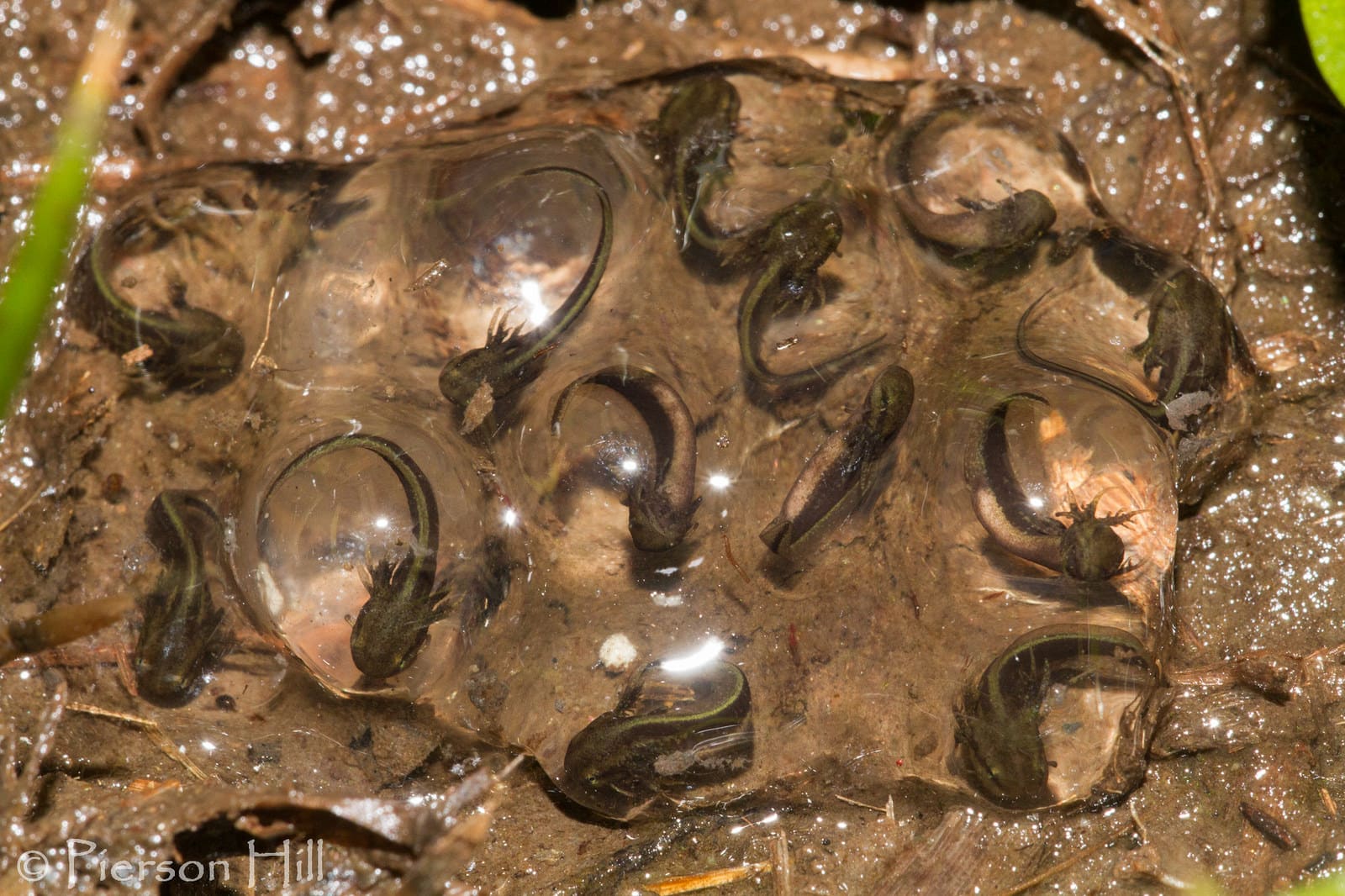
Photo by Pierson Hill (FWC Fish and Wildlife Research Institute) CC BY-NC-ND 2.0
Latin Name: Ambystoma cingulatum
Species: Amphibian
Conservation Status: S1 - Critically Imperiled

The frosted flatwoods salamander measures five inches in length and has a slender body, small head, and rounded tail. They have a silvery mottled back which gives them a frosted appearance, and their underside is black.
Range & Habitat (map)
Frosted flatwoods salamanders have a narrow range in the coastal southeast of the United States where long-leaf pine savannas existed historically. They prefer forests with mature pines and minimal undergrowth that are managed by summer wildfires.
Diet
Their diet primarily consists of invertebrates such as insects, earthworms, and zooplankton.
Life History
Frosted flatwoods salamanders primarily live underground, but they emerge during heavy rains. Rainy weather creates ephemeral (temporary) wetlands that salamanders inhabit during breeding season (October-January). Females lay up to 35 eggs that hatch into larvae with external gills and distinct brown and yellow stripes. Larvae metamorphosize into full adults after three to four months.
Significance
Amphibians such as the frosted flatwoods salamander are excellent indicators of ecosystem health because of their sensitivity to water quality and habitat change. Also, they eat insects such as mosquitos which helps regulate pest populations.
Threats & How You Can Help
Since 2000, there has been a 90% decline in the total population of the frosted flatwoods salamanders. Their main threat is the loss of long-leaf pine savannas to logging and development. While these forests historically dominated the coastal southeast, only 3% of this ecosystem remains today. This is problematic, as these salamanders rely specifically on ephemeral wetlands in long-leaf pine savannas to reproduce. Climate change disrupts the regularity of drought and rain which further affects ephemeral wetland habitats. There is initiative to conserve and restore pine savannas through replantings and prescribed burns to control understory growth. It is important that seasonal wetlands are protected from development and that measures are taken to maintain water quality.