2025 has been a big year for the Port Royal Sound Foundation and our work in monitoring, research, and conservation. As we wrap up 2025 and gear up for 2026, it’s a good time to pause and reflect on the significant progress we have made in laying the groundwork for the PRSound Science initiative to monitor the health of Port Royal Sound and support sound decision-making for our watershed.
Let’s look back at the progress we have made over the last year:
Water Quality Monitoring:

- In January, we ordered 8 YSI Monitoring units and kits to support high-quality water quality monitoring across the watershed.
- In March, we received SCDES approval for our Level 2 Water Quality Monitoring protocol, enabling us to begin training volunteers and collecting water quality data across the watershed.
- In April, we trained the first group of volunteers under the Level 2 Water Quality Monitoring protocol. There are now more than 60 trained volunteers working on this project.
- In April, we also started monitoring water quality in new sites across the watershed twice monthly. We now have 25 new sites being monitored, which have generated more than 300 new observations and monitoring data records.
- In the fall, we worked with our partners at Mērak Labs to analyze 25 years of state data to establish baseline norms and trends of water quality in each Port Royal Sound subwatershed. This analysis allowed us to build a statistical model to run in the backend of our water quality database to quickly flag concerns.
- In November, we received a grant from the Community Foundation of the Lowcountry to pursue strategies for working with county, town, and community partners to manage stormwater across the region more effectively. This project will kick off in January!
Marsh Monitoring:

- In early 2025, we received a grant from the Southeast Coastal Ocean Observing Regional Association (SECOORA) to install Surface Elevation Table (SET) stations throughout the watershed. We have installed six so far and have six more scheduled for early 2026.
- Working with Beaufort County, SC Sea Grant, and the College of Charleston, we were awarded a grant from the National Fish and Wildlife Foundation to map and assess shorelines in Beaufort County to prioritize living shoreline and salt marsh conservation. That work is progressing and will continue into 2026.
- This year, PRSF has also contributed to several state- and region-scale salt marsh and living shoreline collaborative programs, including the South Atlantic Salt Marsh Initiative SC Implementation Team and the South Coast Implementation Team of the SC Coastal Resilience Implementation Plan.
Land Cover:

- Working with Mērak Labs, we analyzed land-cover change for each subwatershed in the Port Royal Sound watershed to identify the areas with the most significant increases in impervious surface area.
- We also developed a calculator to quantify the impacts of proposed development projects on land cover and watershed dynamics within a given subwatershed. This fall, we used that calculator to provide data-driven input for several proposed projects in the region.
Biodiversity:
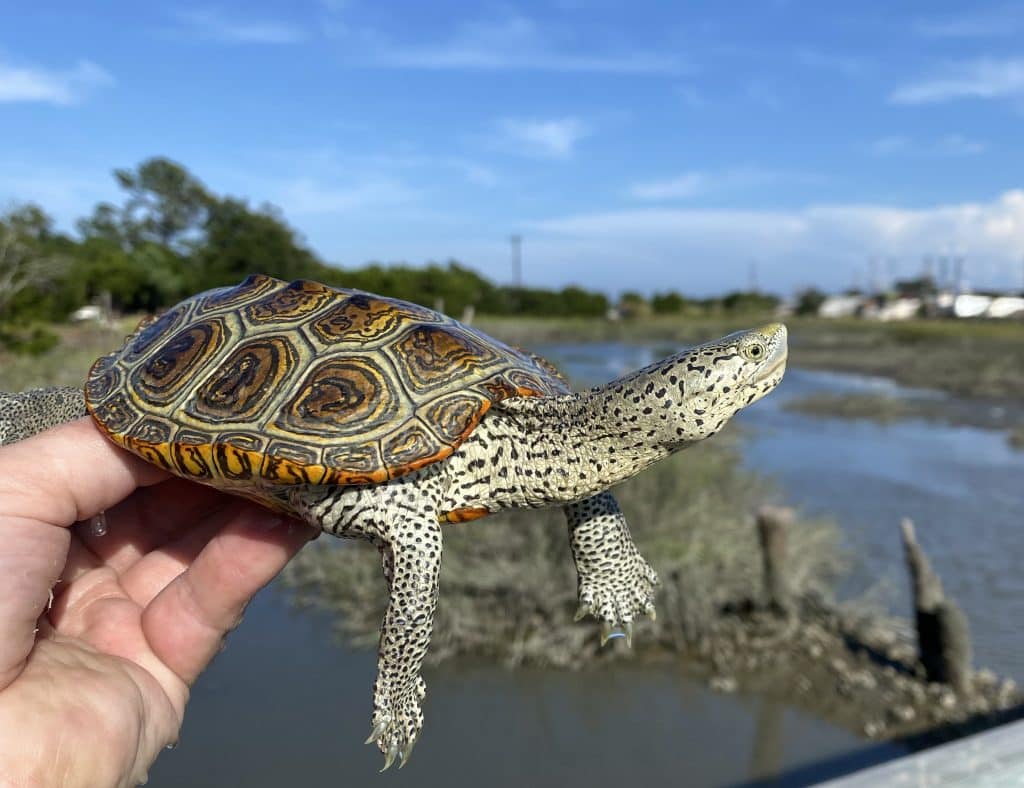
- This summer, we worked with several partner organizations to form the Beaufort Terrapin Project to monitor and track diamondback terrapin populations and road mortality in the region.
- In September, we held our second Inshore Slam Fishing Tournament, which engaged 125 anglers and resulted in more than 1400 fish caught and recorded over ten days. The end of that event kicked off the year-long Reel Science Fishing Challenge to encourage anglers to record EVERY fish they catch to give us deeper insights into fish populations in the Port Royal Sound. Anglers have recorded another 600 fish since October.
- This month, PRSF is participating in three Christmas Bird Count events across the region to help us understand bird populations. In 2026, we’ll explore how best to use data from these counts to assess habitat change.
Community Resilience:
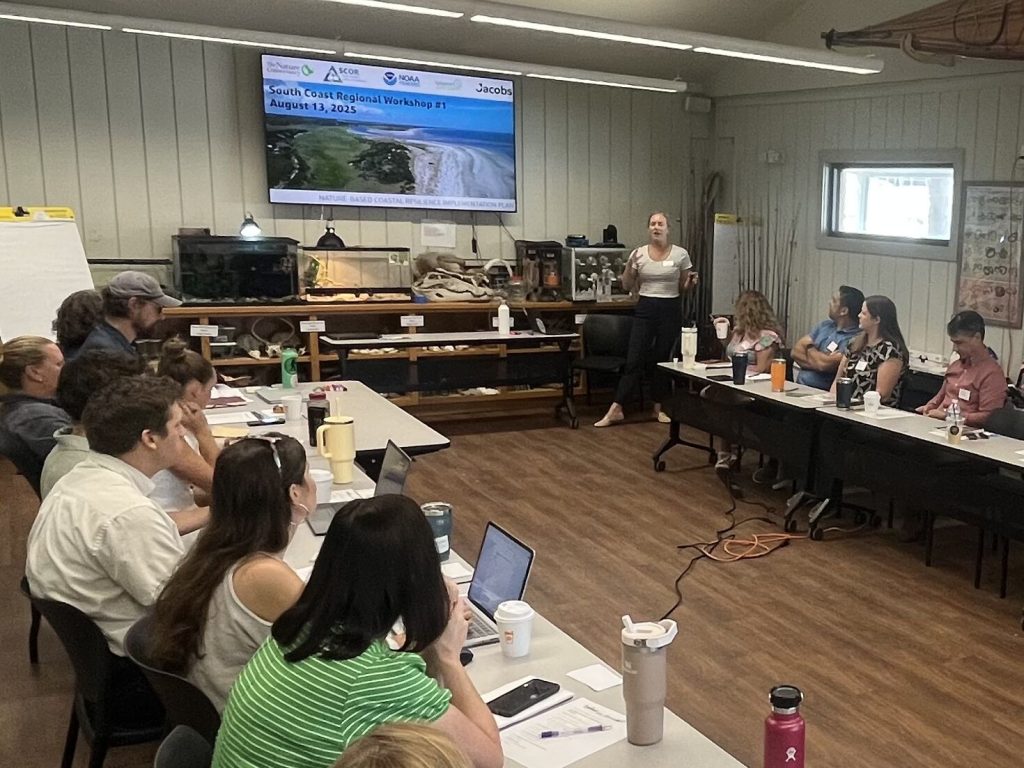
- This year, PRSF has served on several regional working groups to analyze, plan, and coordinate how communities in the watershed can best prepare for and respond to changes driven by population growth and climate change. This included:
- The Salkehatchie-Lower Savannah River Basin Council, which contributed to the updated SC State Water Plan
- The May River Watershed Action Plan (updated plan coming in early 2026)
- The Resilient Coastal Communities Collaborative Program, led by the SC Office of Resilience and SC Sea Grant, coordinates vulnerability assessments and develops shovel-ready resilience projects for communities across the watershed.
- This fall, PRSF also helped establish the Southern Lowcountry Resilience Collaborative to support local government partners in accelerating the implementation of resilience projects.
Phew, it’s been a busy year! 😅 There is no way we could be doing this without the incredible commitment of our volunteers, who take water quality measurements and samples in all weather and conditions twice per month; without our partners, who provide invaluable advice and help; and without our supporters, who believe in the importance of this work and have been willing to invest in this vision. Combined, we are bringing the mission of ‘conserving the Port Royal Sound’ through continuous, comprehensive, and credible monitoring and research to life.
We’re gearing up for an exciting and busy 2026! If you’re interested in learning more and/ or getting involved, you can sign up for updates at https://portroyalsoundfoundation.org/sound-science/#sign-up.
And if you believe in the importance of this work in conserving Port Royal Sound and want to accelerate it, consider contributing to our end-of-year campaign. Thanks, have a great holiday, and we’ll see you in 2026!
From the Conservation Corner (office) – Chris Kehrer & Courtney Kimmel