Brown Water Snake
Latin Name: Nerodia taxispilota
Species: Reptile
Conservation Status: S5
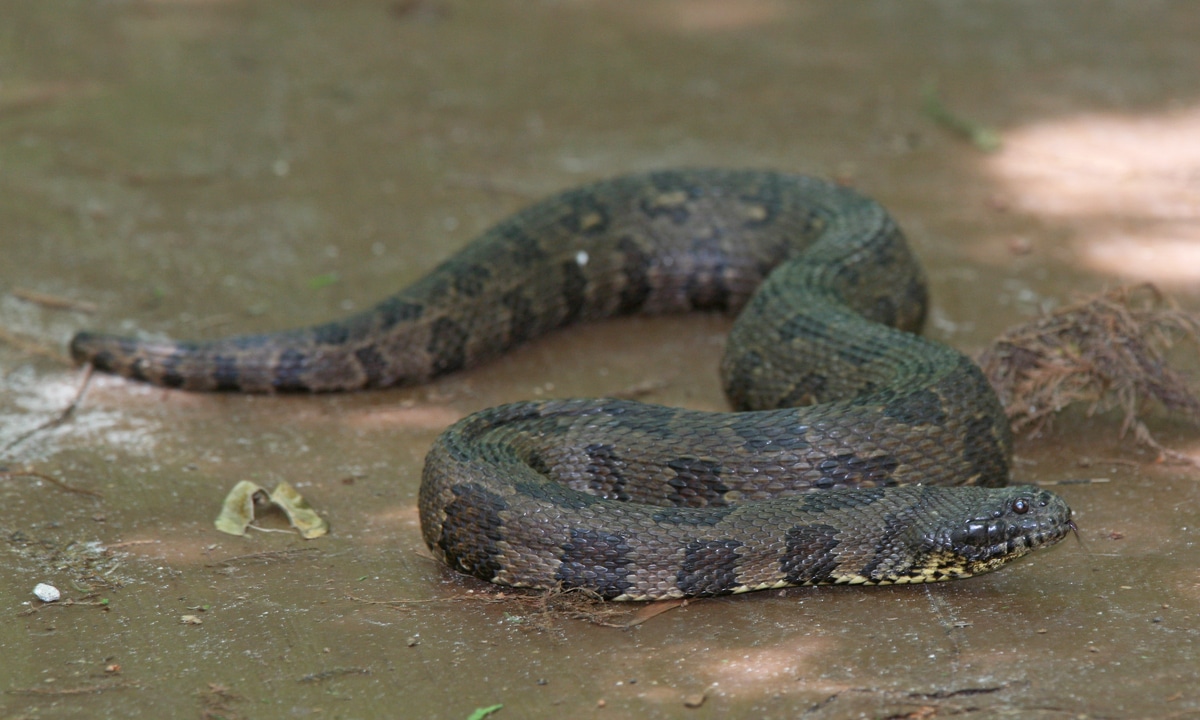

The Brown Water Snake is a large, nonvenomous aquatic species that can grow up to 5 feet long. Its body is covered in dark brown scales with alternating square-like blotches along its sides. When threatened, it may flatten its head to appear larger, leading people to mistake it for a venomous cottonmouth (water moccasin). Its eyes are positioned near the top of the head, aiding vision while swimming.
Range & Habitat
Brown Water Snakes are found throughout the coastal plains and Piedmont regions of the southeastern United States, including Alabama, Georgia, South Carolina, North Carolina, and Virginia. They inhabit rivers, streams, lakes, and other freshwater environments, often basking on branches overhanging the water.
Diet
Primarily piscivorous (fish-eating), these snakes feed mostly on catfish but occasionally consume amphibians, reptiles, crustaceans, and aquatic insects. They catch prey in the water but must bring fish to land to eat.
Life History
Breeding occurs from March to May. Females ovulate in summer and give birth in late summer or early fall to litters ranging from 15–60 young, averaging about 28. The young are independent at birth and receive no parental care. Males mature around 3 years old, while females take 5–6 years. Wild Brown Water Snakes live about 6 years, with similar lifespans in captivity.
Threats & How You Can Help
Although not threatened, these snakes face dangers from water pollution, habitat destruction due to development, and intentional killing—often because they are mistaken for venomous species. To protect them, avoid harming or approaching snakes, and never kill them. Snakes play an important role as predators in aquatic ecosystems and typically only bite when provoked.
