Latin Name: Pomatomus salatrix
Species: Fish
Conservation Status: S4-5 - Secure
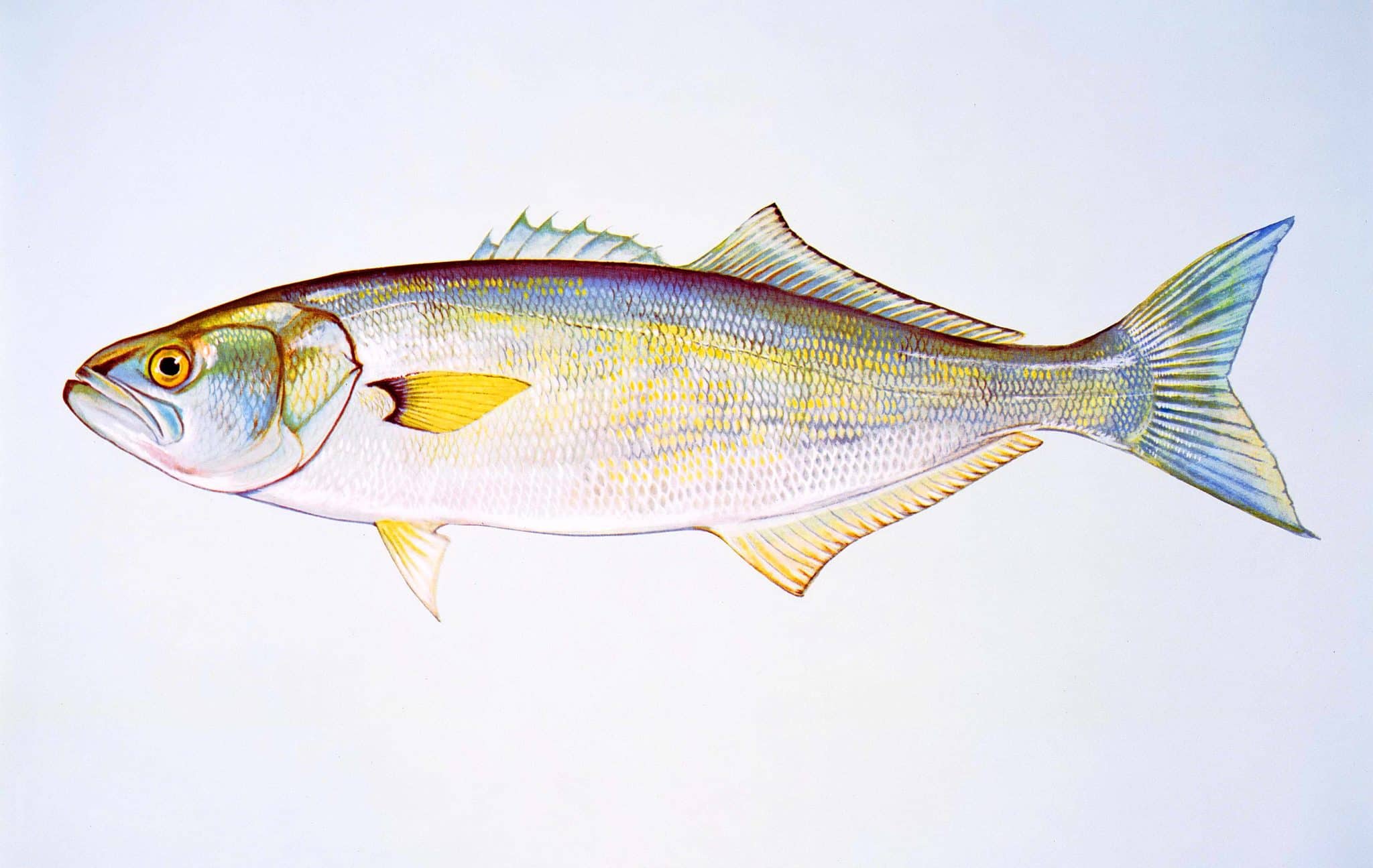
The Bluefish get their name from their coloration; they are typically greenish blue with silver sides and a white belly. They have a large mouth where the lower jaw sticks out slightly past the upper jaw, which is followed by a pointed snout and razor sharp teeth. Their bodies are rather compressed with an overall large head. Living up to 12 years and reaching as long as 40 inches in length.
Range & Habitat
This species is not fully researched so they can be found in more locations than what is listed on most range maps. They are a relatively worldwide species so they can be found in Africa, India, Australia and New Zealand. In the Atlantic they can be found as far north as Canada, relatively the entire east coast of the United States, as well as the Gulf. However, they are migratory so they also can be found as far south as Argentina. They enjoy inshore habitats near beaches and estuaries or bays but can also be found offshore up to 200 miles. They live in subtropical waters that range from 45 to 80 degrees fahrenheit.
Diet
This fish is an aggressive opportunistic carnivore that primarily eats smaller schooling fish like anchovies, sardines, silversides, and mackerels. However, they also eat things like squid, shrimp, and small crustaceans. They themselves often hunt in large fast-moving schools chasing the smaller species to the surface and causing what we call a “feeding frenzy”.
Life History
This species spawns offshore in warm waters typically along the East coast of the United States. There are two distinct spawning groups in this species; the spring-spawning stock are in the south Atlantic from Florida to North Carolina, and the summer-spawning stock are in the Mid-Atlantic and New England coasts. The females can release several million eggs at a time and they are buoyant meaning they float, after about two days they will hatch and begin their lives.They grow rather rapidly during the first years of their life and reach sexual maturity by 2 years old. By the time they reach adulthood they are top predators and have huge influence on other populations.
Significance
They serve a huge role in their ecosystems throughout their entire lifetime. As juveniles they are important food sources for larger predators like the tuna, striped bass, sharks, dolphins and even seabirds. However, as adults they become the top predators and help control the populations of smaller schooling fish. They are also highly valued as a sport fish in the United States. They are huge contributors to many tourist towns and local economies since they put up a huge fight, it causes a huge recreational value.
Threats & How You Can Help
They are heavily targeted by fishing both commercial and recreational which leads to a major overfishing threat. Just like most aquatic species they are also being affected by habitat loss and climate change. One major factor that could help the species would be practicing sustainable fishing, being sure to follow all local size limits and catch limits. Reducing pollution as well as aiding in estuarine conservation.
Additional Resources
https://www.fisheries.noaa.gov/species/bluefish/science
https://www.dnr.sc.gov/swap/supplemental/marine/bluefish2015.pdf
https://explorer.natureserve.org/Taxon/ELEMENT_GLOBAL.2.101998/Pomatomus_saltatrix