Latin Name: Mycteroperca microlepis
Species: Fish
Conservation Status: S3 - Vulnerable
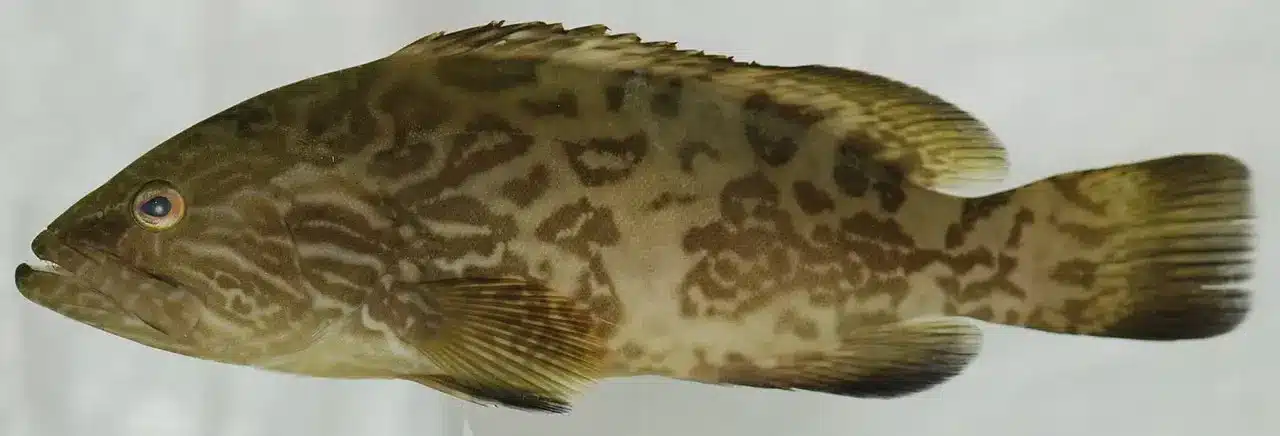
This considerably large and odd looking fish is actually fairly slim and compressed for a grouper. They have a pointed head that leads to a large mouth, with 2 large canine teeth. Their mottled coloration is highly variable between individuals. They range from dark brown to green on their backs, but can fade into a light tan or white on their bellies. They can reach over 3 feet in length and weigh in at over 50 pounds. They are a relatively large species.
Range & Habitat
Primarily you’ll find this fish along the South East Coast of the United States from North Carolina to the Yucatan Peninsula of Mexico, including the Gulf. They prefer hard-bottom environments including ship-wrecks, rock structures, as well as corals or sponges.
Diet
This carnivorous species acts as a predator throughout their entire lifetime but their diet changes slightly over their life span. During the juvenile stage they feed on small crustaceans like shrimp, amphipods, and small crabs. As adults they eat larger prey like fish, crabs, squid, and octopus. They are ambush predators, they use their coloration to blend into their habitat (rocks, reefs, and ledges), and then they attack using their powerful jaws.
Life History
They are a protogynous hermaphrodite species meaning they are all born females and then later in their lives some turn into males. The females reach maturity around 3-6 years old and the sex change typically happens around 10-11 years old. They spawn from December to May peaking in January-March. They spawn using large aggregations meaning they gather together in large groups. In seagrass beds or estuarine waters is where you will find their offspring drifting around living a pelagic life along plankton. After the small larvae grow into small fish they move into deeper areas of the seagrass beds and estuaries. While eventually reaching Rocky bottom habitats, coral reefs, or offshore ledges as adults. This rapid growing fish grows quickly and are considered a larger fish species, they also have rather long lives living up to 30 years.
Significance
They are an ecological and economical valuable species. As adults they are considered top predators in reef systems balancing the populations of the smaller fish species. They assist in making these communities more diverse and healthy. Economically they are considered one of the most valuable grouper species for their firm, and mild tasting meat. They are also commonly valued in cultural practices.
Threats & How You Can Help
Due to their large grouping method of reproduction during those months they are highly overfished. They are also at risk of decline due to habitat loss. Seagrass beds have been in a decline for quite a while now and they use these habitats as their nurseries. Climate change is of course threatening them just like most marine species, rising ocean temperature is causing ocean acidification affecting their food supply, their habitats, and their ability to do natural processes. The best way to help lessen the decline in this species is to support sustainable fisheries, protect their habitats like restoring seagrass beds, and taking part in citizen science projects.
Additional Resources
https://www.fisheries.noaa.gov/species/gag-grouper
https://explorer.natureserve.org/Taxon/ELEMENT_GLOBAL.2.103196/Mycteroperca_microlepis