be e c b
Latin Name: Myotis lucifugus
Species: Mammal
Conservation Status: S2 - Imperiled

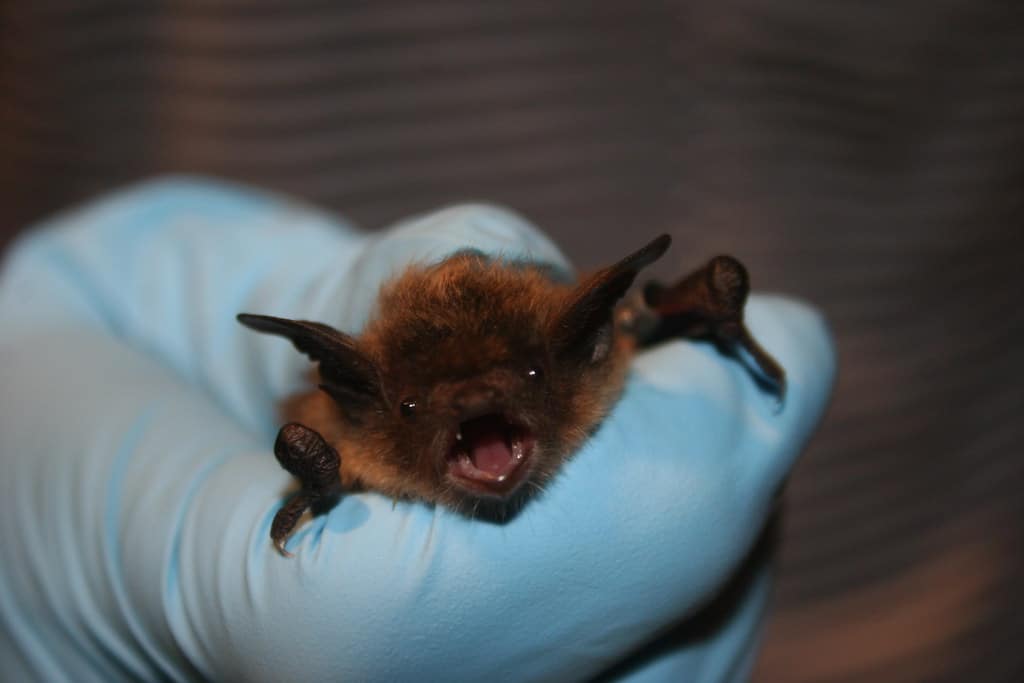
The Little Brown Bat is a small, widely distributed bat species with glossy fur that ranges in color from caramel or golden brown to dark brown or reddish tones. The belly fur is lighter and less shiny. Adults are 2.5–4.5 inches long with an 8–11-inch wingspan, weighing only 5–14 grams. Females are generally larger than males, particularly in winter. Little Brown Bats can reach flight speeds of up to 35 km/h (about 22 mph).
Range & Habitat
This species has one of the broadest ranges of any North American bat, spanning from Canada to most of the northern United States and extending as far south as Georgia. They inhabit diverse environments and roost in both natural sites, such as caves and hollow trees, and human-made structures, including attics and bat houses. They often feed near ponds, lakes, and streams where insects are abundant.
Diet
As insectivores, Little Brown Bats consume primarily aquatic-emerging insects like mosquitoes, caddisflies, and midges, as well as moths, beetles, and spiders.
Life History
Mating occurs from mid-August through winter, with an active breeding phase followed by a passive phase during hibernation. Males often mate with multiple females, while females typically mate only once per season. Gestation lasts about 50–60 days, and females give birth to a single pup annually. Mothers nurse and care for their young for about four weeks, during which pups develop teeth and other traits needed for independence. Young bats become self-sufficient by late summer and reach sexual maturity after about seven months. Females form maternity colonies of up to 100 bats to rear their young. With a lifespan of up to 30 years, this species is among the longest-lived of North American bats.
Significance
Little Brown Bats are crucial for natural pest control, consuming vast numbers of insects each night. They are also researched to learn about echolocation, social structures, feeding methods, and habitat use in bats.
Threats & How You Can Help
Little Brown Bat populations have declined sharply due to threats including white-nose syndrome, habitat loss from deforestation, pesticide use that kills their insect prey, and predation by domestic cats. To help protect them, decontaminate clothing and gear when visiting caves to prevent spreading white-nose syndrome, preserve dead trees that provide roosting habitat, and minimize pesticide use in agricultural and residential areas.