Latin Name: Lepisosteus osseus
Species: Fish
Conservation Status: S4-5 - Secure
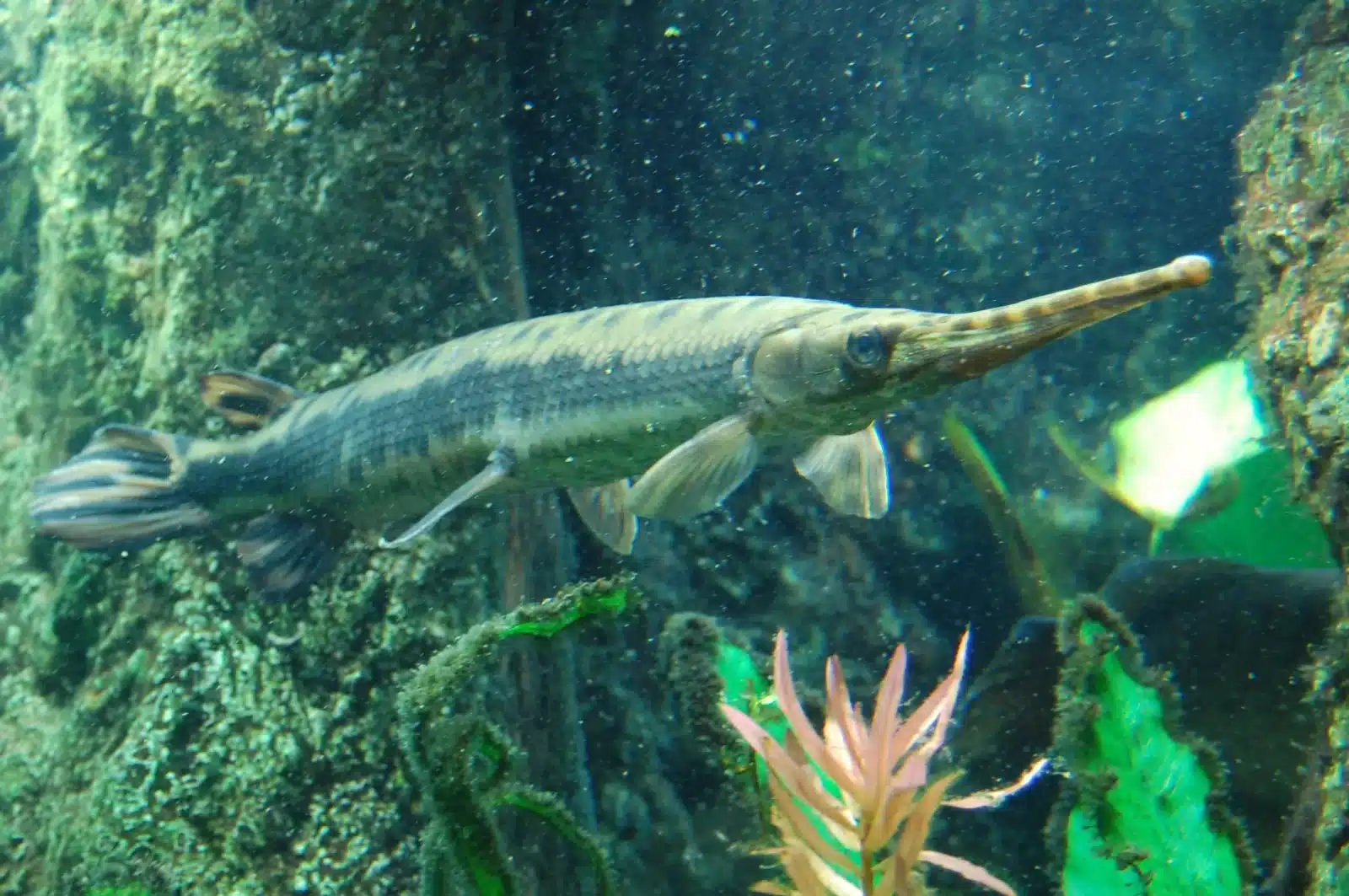
The longnose gar is an easily recognized species due to their elongated torpedo-shaped body and extremely narrow snout. They have sharp needle-like teeth and rough armour-like scales along their entire body. Their coloration is olive to brown with a lighter silvery white belly which allows them to blend in with their murky environments. They also typically have several dark spots along their bodies, fins, and tail. On average they reach about 3 feet in length and weigh about 4 pounds. However, there are some wild cases of size, they have been seen reaching up to 6 feet in length and weighing over 50 pounds.
Range & Habitat
Their range is quite large, reaching all of the eastern and central United States. While extending as far as the Great Lakes, or even as south as Florida and Texas. The species prefers habitats that are slow moving and freshwater like rivers, or lakes. However, also can be found in brackish waters near estuaries.The slow moving water environment creates a murky dark environment that they love. Typically they are found near vegetated areas and muddy or sandy bottoms using their coloration to blend in with the substrate. They have adapted to respire or breath using a special gas bladder that allows them to live in oxygen poor waters that most fish cannot.
Diet
This species is carnivorous that primarily feeds on fish but is opportunistic and will eat other small prey when available. Their long narrow snout with sharp teeth is perfect for grabbing slippery prey. They mainly eat minnows, shad, sunfish, small catfish and occasionally arthropods such as crayfish or insects.
Life History
They spawn in spring and early summer from April to June, which is when temperatures are rising and the vegetation is everywhere. The females have adhesive sticky eggs that she will release onto rocks or logs. Their eggs have adapted to be toxic to predators in order to protect them until they hatch. Once the eggs hatch the larvae will attach themselves onto some sort of plant nearby using a small adhesive disc on their nose until they are ready to swim freely. They grow rather quickly and live quite a long time. They reach sexual maturity between 3 to 6 years old and often live 15 to 20 years.
Significance
They are extremely important to the health of ecosystems. As a top predator they keep the smaller species in check and also can be seen as an indicator species. Which practically means if there is an abundance of them the ecosystem in that area is healthy and well maintained. This species is also seen as a challenging sport fish that most anglers try to catch for the fight they put on. They also hold cultural importance to some Native American tribes, their tough scales are sometimes used to make jewelry and tools.
Threats & How You Can Help
Destruction of their natural habitats is the main stress on this species. The destruction of wetlands, rivers, pollution, dams. They all alter their natural environment. Overfishing is an issue with this species because they are misunderstood, some people see them as a trash fish and just kill them unnecessarily. The best way to help them is to minimize pollution, and promote awareness of the species.
Additional Resources
https://www.dnr.sc.gov/fish/species/longnosegar.html
https://explorer.natureserve.org/Taxon/ELEMENT_GLOBAL.2.106443/Lepisosteus_osseus