Photo by Dave Thomas CC BY-NC 2.0
Latin Name: Myotis septentrionalis
Species: Mammal
Conservation Status: S1 - Critically Imperiled
Northern long-eared bats, also called the northern myotis, have large ears (compared to their small bodies) that they use for echolocation. Their bodies are typically only 3-4 inches long with a 9-10 inch wingspan, and they weigh only 6-9 grams. These bats have color on their back and wings varying from dark brown to golden, and they have a light cream underbelly.
Range & Habitat (map)
Their range encompasses most of the eastern United States and extends as far west as Montana. They also inhabit most of southern Canada in the provinces of Alberta and British Columbia. These bats typically hibernate in caves but will roost in forested areas within tree cavities, under bark, or in human-made structures. They typically fly and hunt near bodies of water and open fields that border forests.
Diet
Northern long-eared bats are insectivores that hunt at dusk and through the night, primarily eating moths. They also catch beetles, flies, ants, and other bugs.
Life History
Northern long-eared bats are known to live up to 19 years. They live in colonies and mate before they hibernate, delaying fertilization of the egg until winter is over. Then, females migrate to summer grounds in forests and form smaller mother colonies with up to 60 individuals. In the late spring and early summer, one pup is typically born from each female, and the pups will learn to fly at 3 weeks old.
Significance
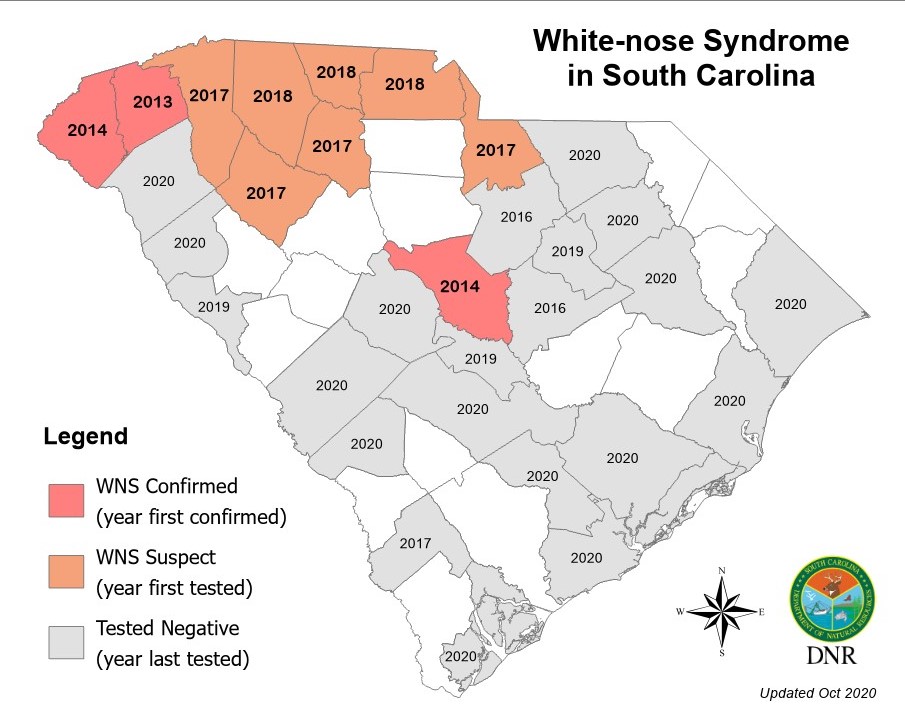
It was not always thought that northern long-eared bats inhabited the South Carolina coast, but in 2016, a roosting colony was documented in the Port Royal Sound area by the Palmetto Bluff Conservancy. This was a positive discovery, as the coast serves as refuge from a fungal infection called white-nose syndrome that primarily spreads in caves. Northern long-eared and other species of bats benefit humans, as it is estimated that billions of dollars each year is saved on agricultual pest control with the help of bats alone.
Threats & How You Can Help
Northern long-eared bats are considered endangered under the Endangered Species Act. The main threat they face is the rapid spread of white-nose syndrome (WNS) in cave hibernating populations. WNS is a fatal infection that creates a white, fuzzy appearance around the bats’ nose and ears. Since the Port Royal Sound area does not have caves, it seems to serve as a safe roosting and hibernating habitat for bats that live here year round. To help prevent WNS outbreaks, it is important to clean all shoes and equipment before and between visiting caves. Dead bats with WNS symptoms should be reported to a local wildlife agency. Some people choose to provide human-made bat houses to increase suitable roosting habitat, but there are factors to consider when buying, building, or installing a bat house. Refer to the “Additional Resources” section for a guide on bat habitats and houses!
Additional Resources
Palmetto Bluff Conservancy on the first northern long-eared bats documented on the SC coast:
https://www.palmettobluff.com/discover/stories/north-long-eared-bats-at-the-bluff/
A map of WNS occurrence in SC from SCDNR:
https://www.dnr.sc.gov/wildlife/bats/assets/SCCounties2.jpg
A guide to creating bat habitat and bat houses:
https://www.batcon.org/about-bats/bat-gardens-houses/