Latin Name: Sphoeroides maculatu
Species: Fish
Conservation Status: S4-5 - Secure
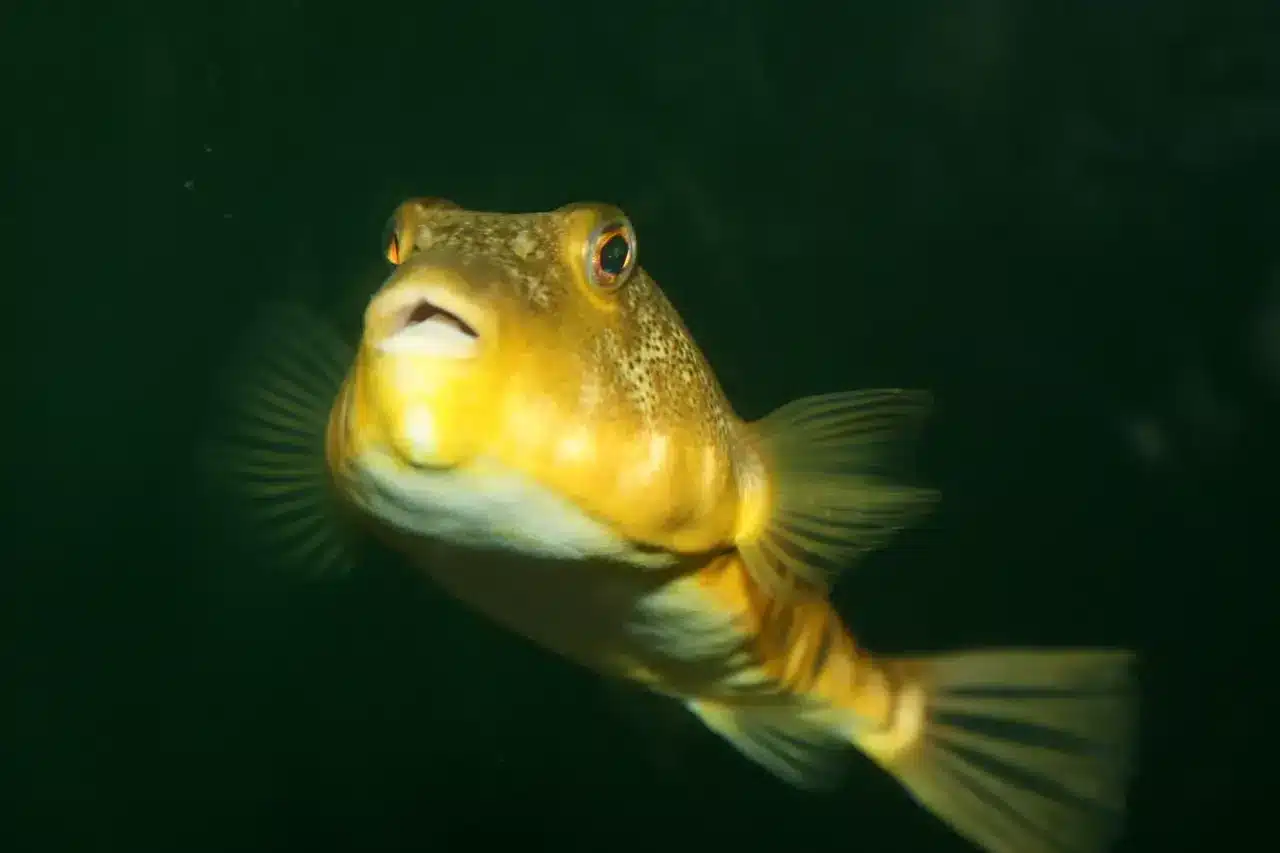
Often known as the blowfish, the northern puffer is a small fish that is easily identified for their round bodies and balloon-like bellies covered in rough skin. They get their name because when they are startled or feel threatened they can blow up or inflate their bodies and become larger. They are tan to yellow in color often with brown spots, and have a pale white belly. On average they get 8-10 inches in length and have beak like mouths.
Range & Habitat
This species can be found along the entire east coast of the United States, as well as some parts of Canada. They thrive in shallow coastal habitats like bays, and estuaries. Typically where there are sandy or muddy bottoms because it provides good food resources and places for them to hide. During warmer months they move closer to shore for feeding but during cooler months they move offshore to avoid the low temperature waters.
Diet
Using their beak-like teeth they have adapted to eat hard-shelled prey like crabs, snails, and mussels. They also occasionally eat things like worms, or plants. They are considered bottom feeders and will slightly dig around in muddy or sandy bottoms with their snouts to uncover their food.
Life History
Their spawning season is in the warmer months of spring and summer, in bays and estuaries near shore. The females typically lay clusters of eggs in weeded areas and the males guard the eggs until they hatch which takes about a week. After hatching they live a planktonic lifestyle drifting through the water column. They grow rather quickly, reaching maturity by 2 years old. However, they do have a rather short lifespan only living 4-6 years in the wild.
Significance
This species plays a key role in the management of smaller species that they eat. They aid in population control, but also are a food source of other fish and some seabirds. Culturally they are seen as a delicacy often cherished for their mild and sweet flavor. They also play a huge part in getting people excited or more involved in marine life and coastal conservation due to their unique behavior and ability to inflate.
Threats & How You Can Help
A main threat for this species is due to human related activity such as habitat loss. Coastal development is causing loss of estuaries and bays which is where they lay their eggs and live for half the year. Pushing them out of their habitats could lead to population decline. A good way to help this species would be to become more knowledgeable on what causes the loss of these habitats. Aiding in efforts of putting in living shorelines rather than large and harsh concrete walls.
Additional Resources
https://www.chesapeakebay.net/discover/field-guide/entry/northern-puffer
https://explorer.natureserve.org/Taxon/ELEMENT_GLOBAL.2.104352/Sphoeroides_maculatus