
Peacrab
Latin Name: Zaops ostreus
Species: Marine Invertebrate
Conservation Status: Not Evaluated
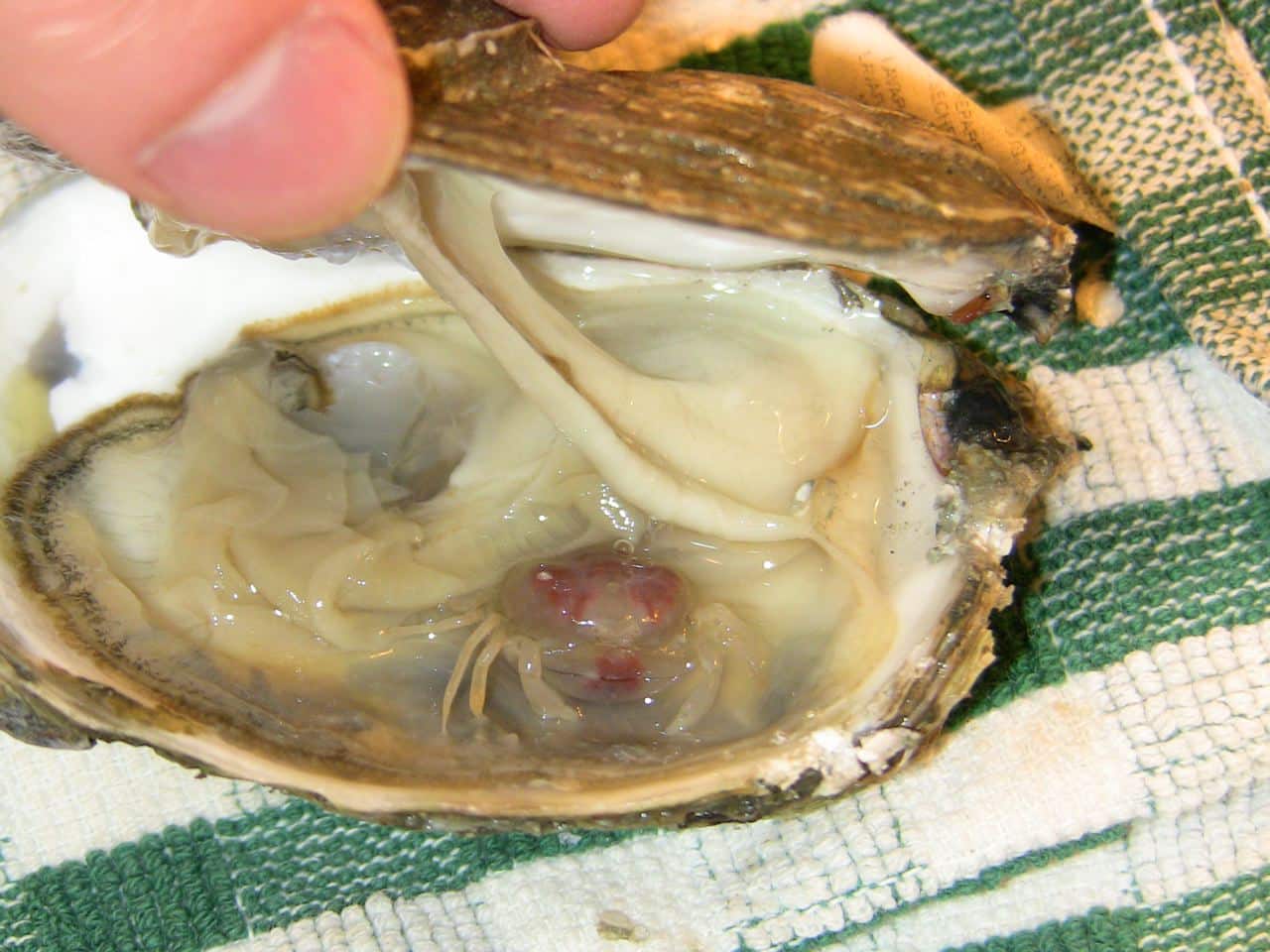
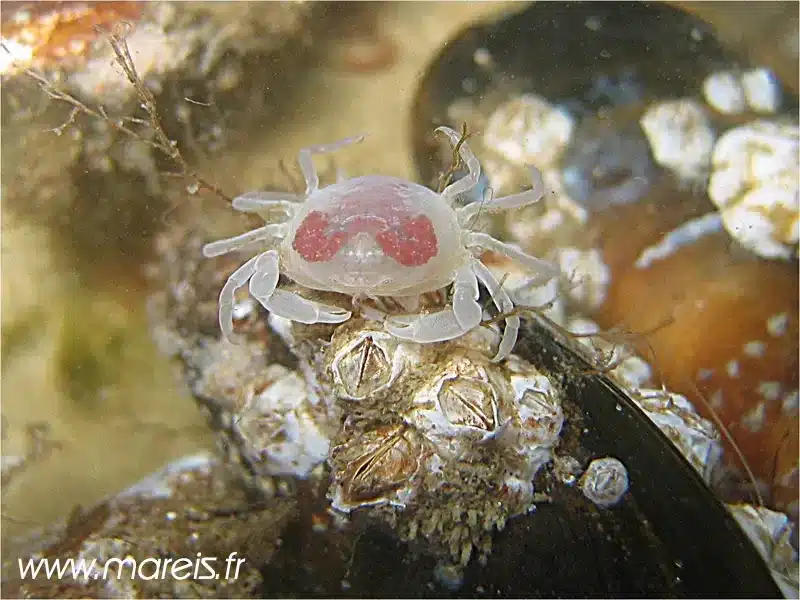
The oyster pea crab, also called the oyster crab or pea crab, is a small parasitic crab measuring only 1 to 2 centimeters across. It has a very flat, rounded shell (carapace) with short, slender legs. Its coloring varies—ranging from brown and gray to green—but it is always somewhat translucent, helping it blend into its surroundings. Female pea crabs are larger than males, which is typical for the species.
Range & Habitat
Oyster pea crabs are found worldwide in shallow coastal waters. Along the Atlantic Coast, they range from Brazil up to Massachusetts. These crabs mainly inhabit oyster reefs in estuaries and bays. Female pea crabs spend nearly their entire adult lives inside oysters, while males are free-living and leave their host after developing a hard shell to search for mates. Besides oysters, they can also be found living inside mussels and other aquatic mollusks (bivalves).
Diet
Pea crabs feed primarily on organic particles and microorganisms found inside oysters. They consume algae, plankton, and other tiny food particles filtered from the water or scraped off the oyster’s gills.
Life History
Mating usually occurs in late spring and early summer when waters are warm. Males seek out females using pheromones and physical courtship displays. After mating, females carry up to 9,000 eggs for several weeks before releasing larvae into the water. The larvae drift freely in the plankton during early development, passing through the zoea and megalopa stages. After several molts, they settle onto oyster beds or other suitable habitats, where they grow into adults. Females often remain inside oysters for life, while males continue to roam in search of mates. Mature females can produce multiple broods over their lifespan.
Significance
While considered parasites, pea crabs are often viewed as a sign of healthy oyster reefs. Some people even consider finding one inside an oyster to be good luck, and in some regions, they are eaten as a delicacy.
Threats & How You Can Help
No specific conservation measures or major threats have been documented for this species.
Additional Info
-
Larvae have distinct zoea and megalopa stages.
-
Peak mating activity occurs in June and July.
-
Females in their second or third year can produce multiple broods per season.