Seminole Bat
Latin Name: Lasiurus seminolus
Species: Mammal
Conservation Status: S3 - Vulnerable
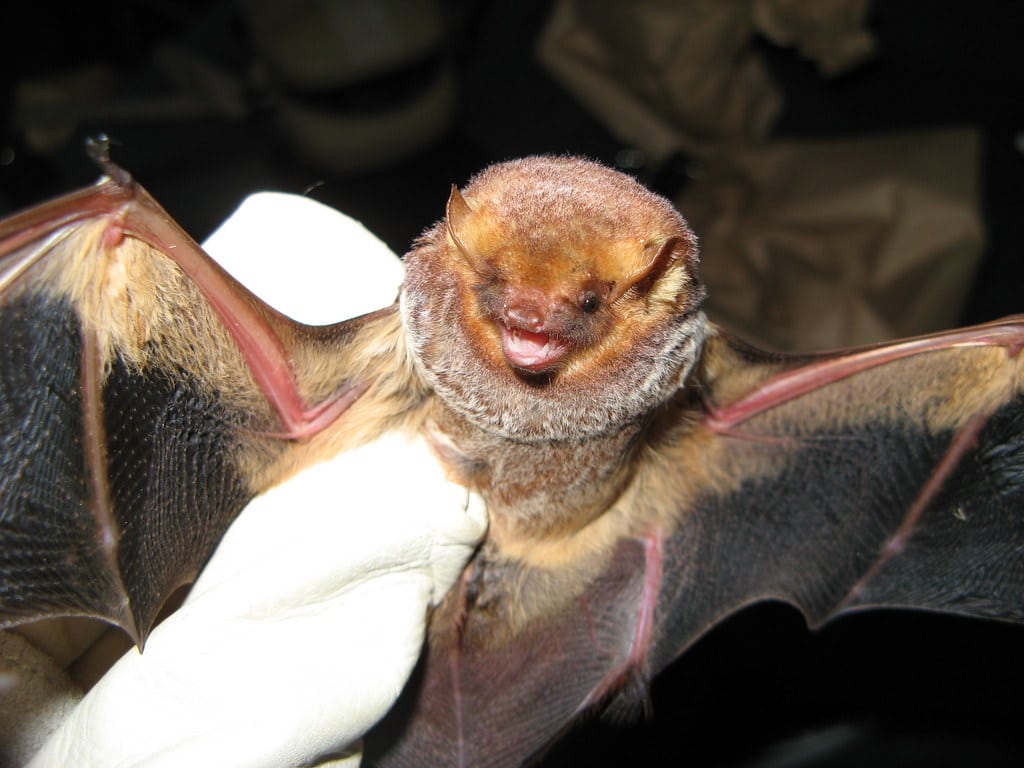
The Seminole Bat is a medium-sized species, measuring 4.25–4.5 inches in body length with an 11–13-inch wingspan and weighing 7–14 grams. Its fur is a rich mahogany brown with frosty white tips and a lighter underside. Whitish fur highlights the throat and chest, while a golden tint surrounds the face and ears. Females are slightly larger than males, a characteristic known as sexual dimorphism. Seminole Bats are often mistaken for red bats due to their size and shape, but their darker color and distinctive white-tipped fur set them apart.
Range & Habitat
This bat species has a broad range across the southeastern United States, from Virginia to northern Florida, westward to Texas, and occasionally into Arkansas and North Carolina. Seasonal movements cause population numbers to increase in southern areas during winter while decreasing in the north. Seminole Bats inhabit mixed deciduous and pine forests, typically roosting high in pine trees but also in clusters of Spanish moss, under loose bark, or within leaf litter. They usually roost alone but may occasionally be found in small groups.
Diet
Seminole Bats are insectivores, feeding on a variety of insects including wasps, flies, beetles, dragonflies, bees, and crickets.
Life History
Their life history is not well studied, but researchers believe they breed from late May to early June. Females typically give birth to one pup (sometimes up to four) after an estimated gestation of 80–90 days. Young bats begin flying within 3–4 weeks and may reach reproductive maturity around one year old.
Significance
Seminole Bats play a vital ecological role by helping control insect populations, benefiting both natural ecosystems and human communities.
Threats & How You Can Help
The primary threat to these bats is the loss of roosting habitat. White-nose syndrome, a fungal disease affecting many bat species, is not currently a major issue in their coastal range. To help, avoid removing Spanish moss from trees and conserve pine forests and older trees with loose bark that serve as natural roosts.
Additional Resources
https://animaldiversity.org/accounts/Lasiurus_seminolus/
https://www.batcon.org/bat/lasiurus-seminolus/
https://www.inaturalist.org/taxa/40521-Lasiurus-seminolus
https://www.dnr.sc.gov/wildlife/bats/SCBatConservationPlanChapter1.pdf
https://fw.ky.gov/Wildlife/Pages/Seminole-Bat.aspx#:~:text=Description%3A%20A%20medium%2Dsized%20bat,mahogany%20brown%2C%20tipped%20with%20white.
https://myfwc.com/wildlifehabitats/profiles/mammals/bats/seminole-bat/