
Latin Name: Leiostomus xanthurus
Species: Fish
Conservation Status: S3 - Vulnerable
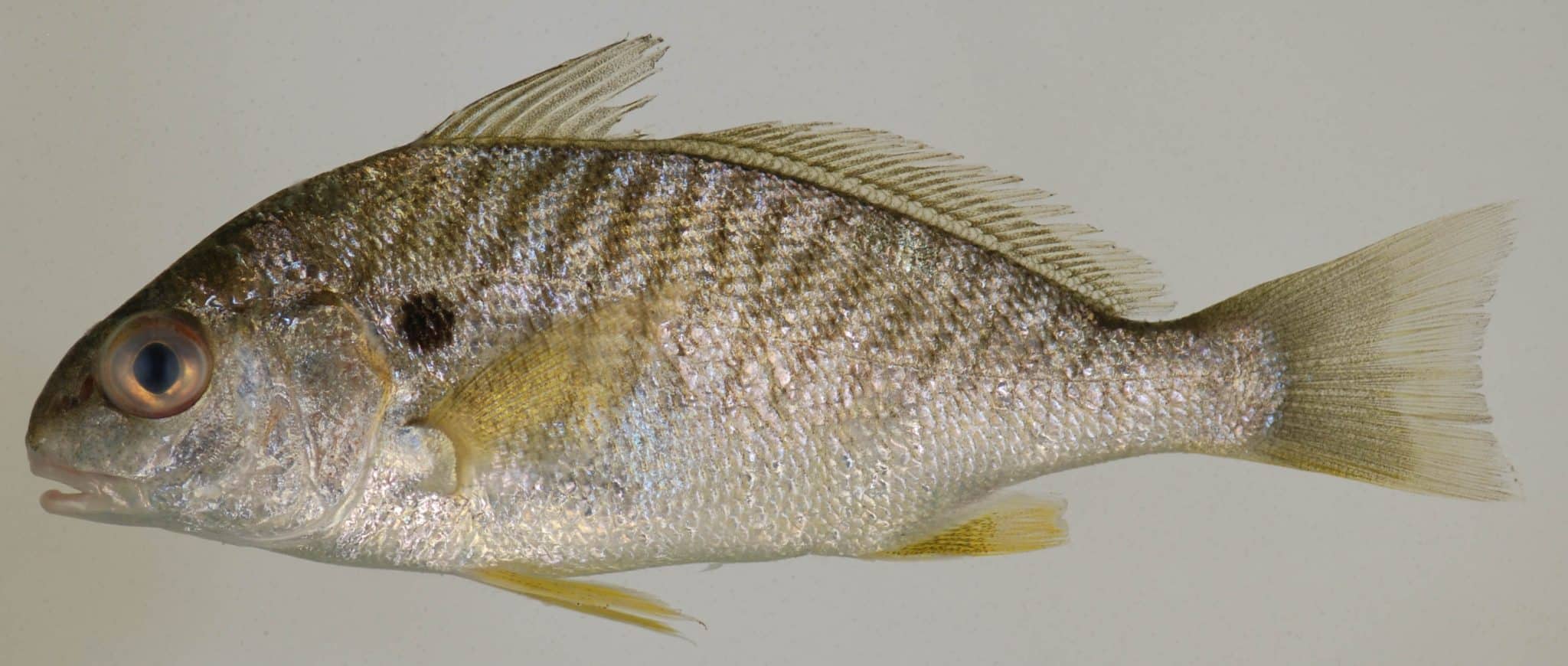
This small silvery fish is a member of the drum family and is commonly identified by the black spot they have just behind their gills. They have a slightly downturned mouth because they eat off the sea floor. On average they grow to about 10 inches in length and weigh about 1 pound. Just like most species in the drum family they can produce a croaking sound by vibrating a sonic muscle against their swim bladder.
Range & Habitat
They are found along the eastern coast of the United States ranging from Maine to Florida and also reach into the Gulf. Typically they are most abundant from New Jersey to Florida. They thrive in shallow water coastal environments like tidal creeks and estuaries. Their juveniles usually live in brackish waters at river mouths but the adults live a little more offshore.
Diet
This species’ diet varies depending on their stage in life. As juveniles they feed on organisms like small crustaceans, worms, and tiny mollusks, practically most things along the sea floor. The adults still forage along the sandy/muddy bottoms but consume larger benthic organisms like amphipods, shrimp, and small clams. Their downturned mouths have adapted to make their bottom-feeding much easier.
Life History
They live for about 5 years and reach sexual maturity by 2 years old or when they are roughly 5-7 inches long. They span offshore beginning in fall during cooler months but can continue until spring. The females release thousands of buoyant eggs that are fertilized in the water column, once fertilized the currents carry the eggs into nursery habitats like estuaries. The juveniles stay in estuaries where there’s plenty of food and few predators. They are a migratory species as they get older they will move into deeper coastal waters during winter months and return to estuaries during late spring and summer.
Significance
They serve a crucial role in the ecosystem serving as both prey and predator. They keep smaller populations in check but are also eaten by larger fish and marine mammals. Although they are considered a small fish they are often caught in large numbers and then sold on the market for bait. They serve a huge economical role for being easy to catch and are a good bait. They are also often used as an indicator species, their population health often reflects the health of their habitat.
Threats & How You Can Help
This species is primarily threatened by humans and our destruction of their natural habitats. Pollution of estuaries, coastal development, dredging, and anything else that alters the shallow water environments. Climate change is a big factor since carbon output is causing ocean acidification and higher salinities. The best way to help is to support conservation efforts of estuaries and marshlands. Reduce your own personal pollution the most you can and support cleanup efforts.
Additional Resources
https://www.dnr.sc.gov/marine/species/spot.html
https://www.chesapeakebay.net/discover/field-guide/entry/spot
https://explorer.natureserve.org/Taxon/ELEMENT_GLOBAL.2.104574/Leiostomus_xanthurus