
Photo by Amaury Cruz
Latin Name: Eudocimus albus
Species: Birds
Conservation Status: S2 - Imperiled
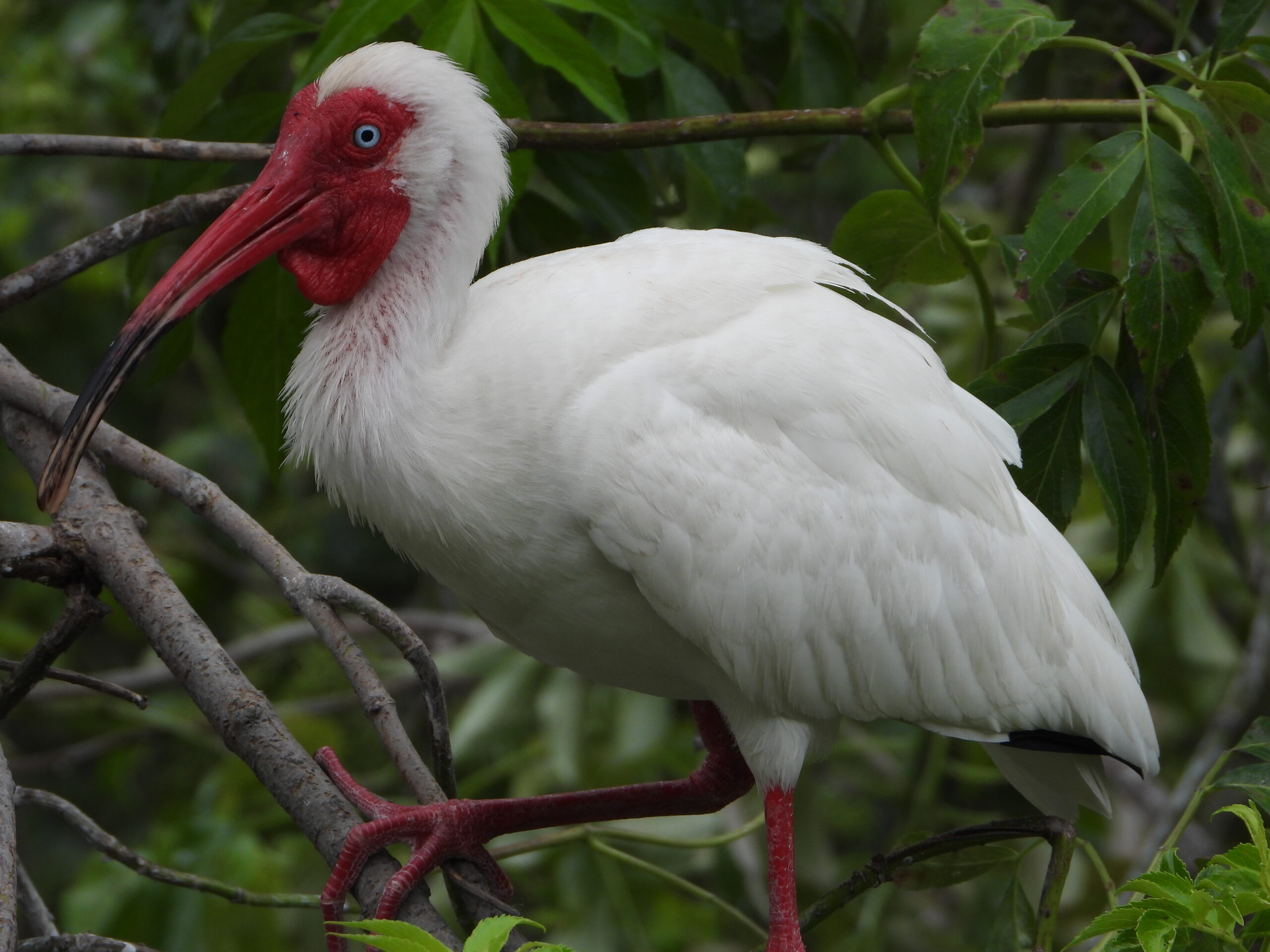
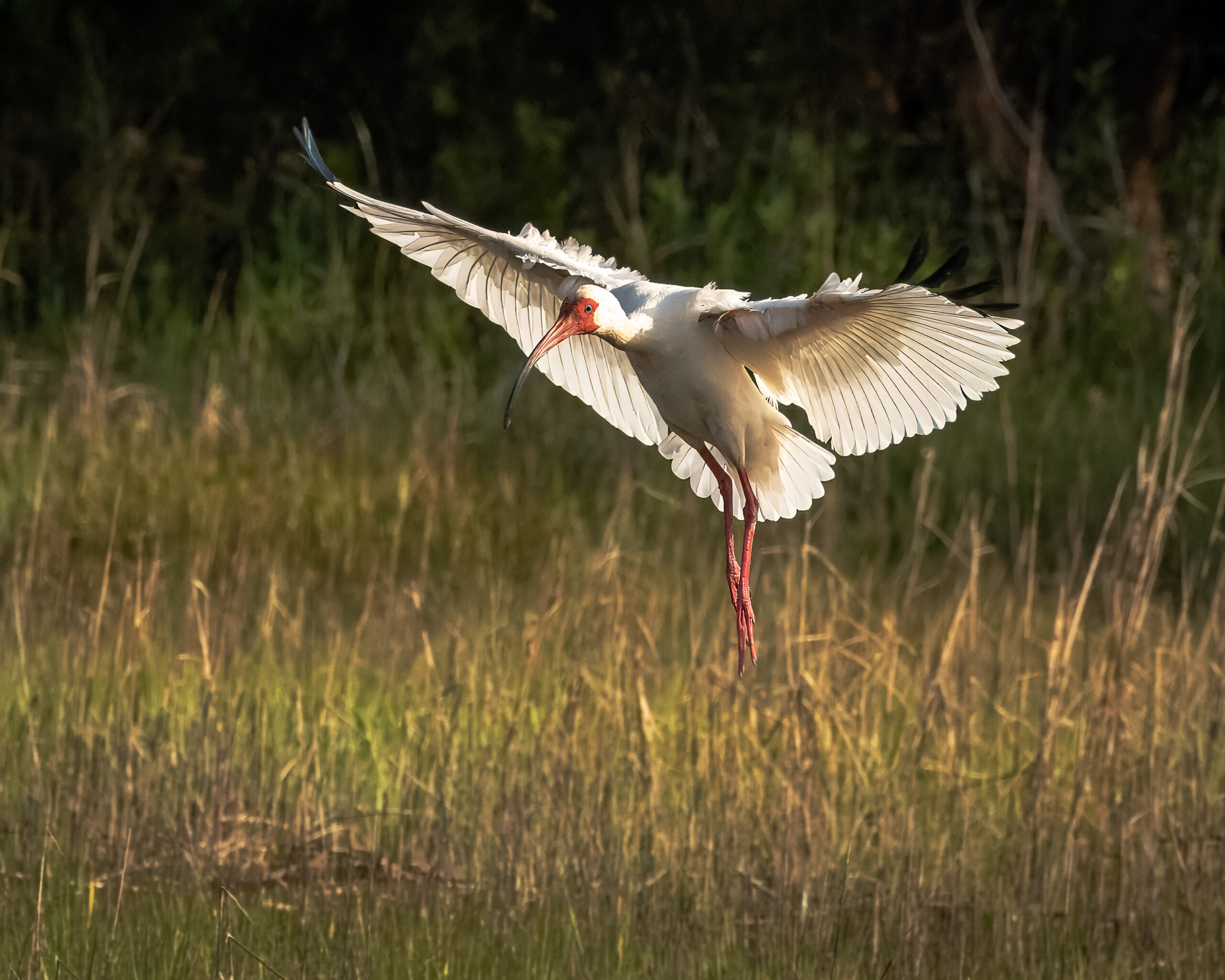
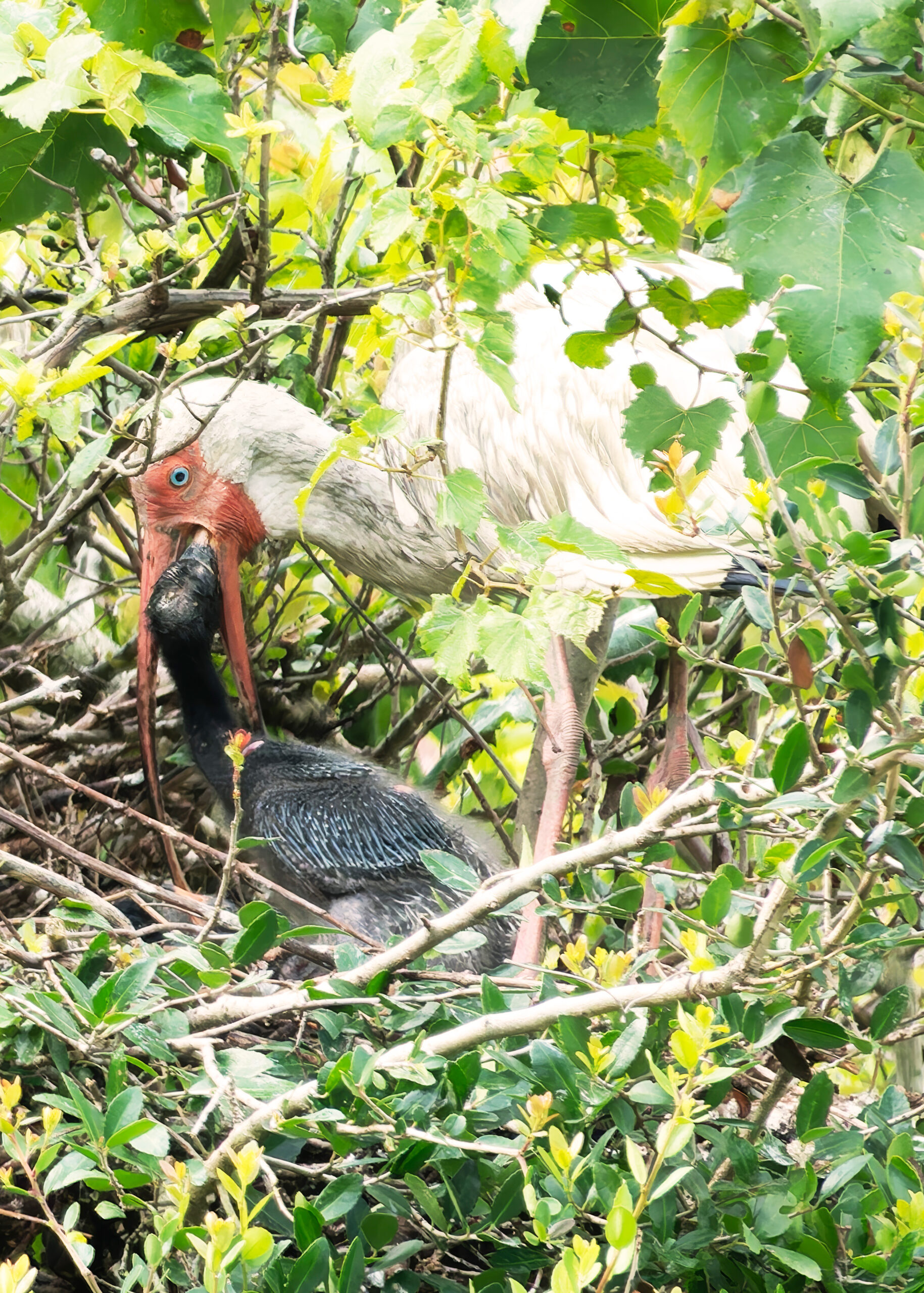
The White Ibis is a medium-sized wading bird easily recognized by its bright white feathers, vivid blue eyes, bare red facial skin, long downward-curved red bill, and long red legs adapted for walking through shallow waters. In flight, the black tips of their wings are clearly visible. Juveniles differ in appearance, having brown feathers, less pronounced red coloring, and feathered faces rather than the bare red skin of adults.
Range & Habitat (map)
This species is found throughout the coastal southeastern United States, from North Carolina through the Gulf Coast, and extends south into Central and South America, including Colombia and Venezuela. White Ibises inhabit freshwater and saltwater wetlands, including marshes, swamps, tidal flats, and ephemeral wetlands. They are also commonly seen foraging on large grassy lawns and golf courses, particularly after rainfall when the soil is soft for probing.
Diet
White Ibises primarily feed on aquatic invertebrates such as crabs, crayfish, and marine worms but also consume insects and earthworms. They use their long, curved bills to probe soft, wet soils in search of prey. Foraging often occurs in shallow sections of wetlands and sometimes in residential areas with saturated lawns.
Life History
Highly social birds, White Ibises typically forage in large groups and nest in tree colonies called rookeries. During breeding season, males arrive first at the colony to attract females. Once paired, females choose a nest site in a tree while males gather nesting materials for the female to arrange into a platform. Clutches typically contain up to five blue-green or mottled white eggs, which are incubated for about 21 days by both parents. Chicks hatch with straight bills, begin wandering from the nest at three weeks old, fly by six weeks, and leave the colony to forage on their own after seven weeks.
Significance
White Ibises are a popular and easily recognizable bird species, drawing birdwatchers and nature enthusiasts to coastal wetlands where they play an important ecological role as foragers. Their presence highlights the importance of protecting and conserving these wetland habitats.
Threats & How You Can Help
The greatest threat to White Ibises is the loss or alteration of wetlands used for feeding and nesting. While they can adapt to human-dominated landscapes, the conservation of natural wetlands and the protection of nesting colonies from disturbance are essential for sustaining healthy populations.