PRSound Science
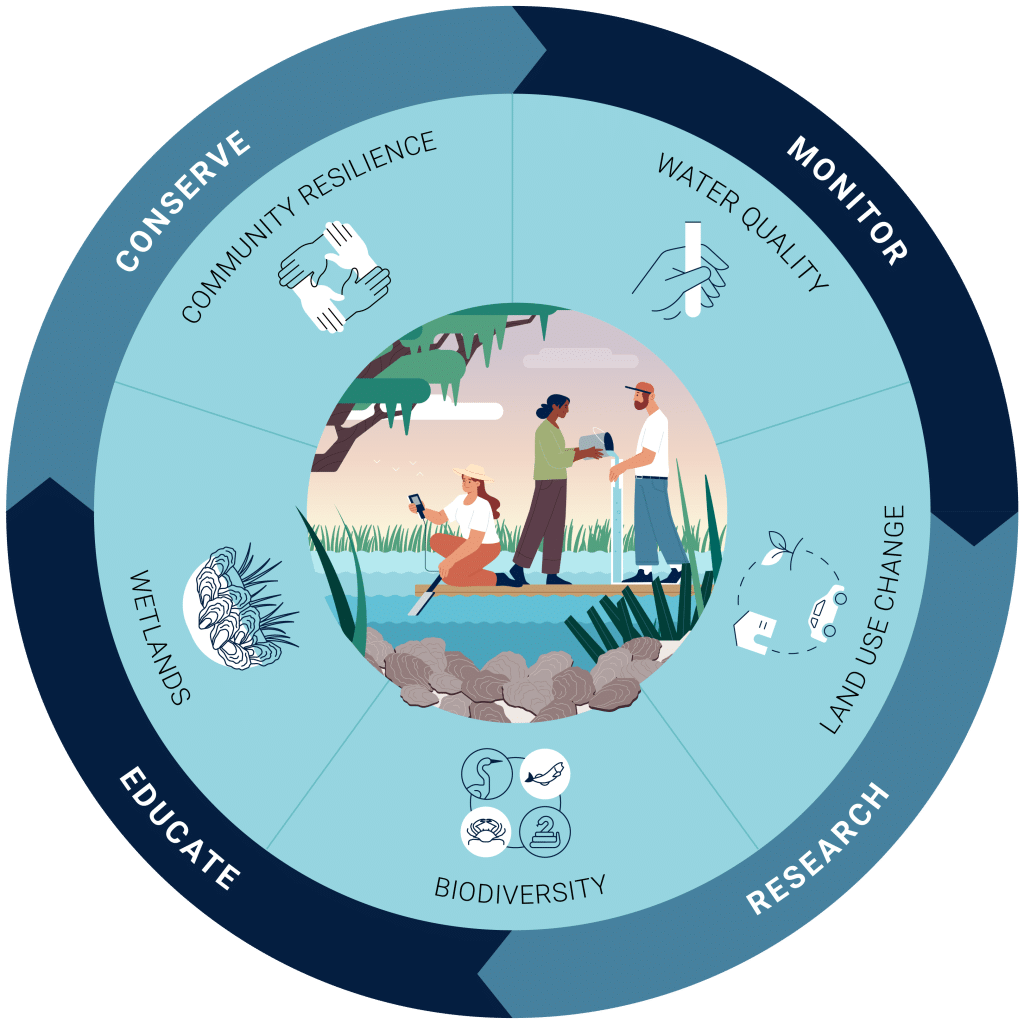
The Port Royal Sound Foundation is dedicated to the conservation of the Port Royal Sound for the environmental, cultural, and economic well-being of the area. This work requires defining the conditions we are trying to conserve, monitoring for change, identifying the sources of changes and their potential impacts, and providing people with the information they need to make good decisions for the health of the Sound. This is the basis for the Port Royal Sound Science program.
How We Work
We can’t conserve the Sound alone! PRSF engages citizen scientists and a wide range of partners in our monitoring, research, and conservation work. We also support research by agencies and universities to advance our knowledge of the Port Royal Sound.

Citizen Science
We depend on committed and enthusiastic citizens and volunteers to help collect data about the state of the Port Royal Sound.

Collaboration
We work closely with a wide range of partners from universities, state and local agencies, other NGOs, and private communities and citizens to make this work possible.
Research
When our monitoring spotlights a question or an area that requires more inquiry, we work with our partners to support research to learn more about problems, their causes, and how we can address them.
Monitoring Indicators of Health & Change in the Port Royal Sound
PRSF organizes our monitoring and research around five broad categories of indicators that are critical to the health of the Port Royal Sound and the surrounding watershed. Monitoring and studying these indicators helps us detect when change is occurring, and allows us to identify issues before they become problems.




Water Quality
Water quality is a fundamental indicator of what is happening in the watershed. Changes in the condition of water tell us when something is changing on land, underwater, or in the atmosphere. Changes in water quality can also indicate likely changes in the ecosystem over time, so keeping a constant eye on water quality throughout Port Royal Sound helps us track the health of the system.
Port Royal Sound Foundation works with volunteer citizen scientists, students and faculty from USCB, and partners around the watershed to collect essential water quality data in subwatersheds of the Port Royal Sound. This water quality data is compared to what we consider normal levels for each parameter based on location and season, allowing us to detect concerns that require further investigation.
In 2024, PRSF worked with USCB and the SC Dept of Environmental Services to develop a plan for conducting water quality monitoring that relies on trained volunteers and generates data considered credible by the state for decision-making purposes (i.e., Level 2 data). The state approved this plan, and we started monitoring sites across the watershed in April 2025. This data will provide higher resolution and higher frequency data than what the state is able to provide. Today, we have more than 45 trained volunteers monitoring 24 sites in the lower watershed (south of I-95), and we will be adding more sites as we increase lab and volunteer capacity.
Since 2015, PRSF has been part of the statewide tidal saltwater SC Adopt-A-Stream program. We train and support volunteer citizen scientists to monitor water quality using methods different from those at Level 2 in locations around the watershed, once per month. Adopt-A-Stream is managed by the SC Department of Environmental Services and generates data useful for identifying problems that the state should investigate. This water quality monitoring program is excellent for individuals and groups interested in learning more about the science behind water quality monitoring, who don’t have as much time to commit as Level 2 requires.
 In 2022, the Port Royal Sound Foundation collaborated with the SC Department of Natural Resources (SCDNR) to conduct a watershed-specific summary of the wealth of data collected by the SC Estuarine and Coastal Assessment Program (SCECAP) for the previous twenty years. The goal of this report is to provide an overview of the estuarine habitat quality data collected at SCECAP sites located within the Port Royal Sound watershed as a State of the Sound report.
REPORT SUMMARY
The majority of Port Royal Sound’s large tidal creeks and open waters, based on SCECAP data, were classified as good or healthy estuarine habitat. Environmental quality is higher in the Sound compared to summaries of the entire SC coastal area. Similar to findings from the coast-wide summaries, tidal creeks in the Sound were observed to be more stressful habitats compared to open water areas. There were a few open water and several tidal creek sites with impairments in the quality of the water, sediment, or biological condition, resulting in some sites having impaired habitat quality. In addition, there were some indications of changing quality from the first eleven-year period (1999-2009) compared to the second eleven-year period (2010-2020), resulting in more sites having more impaired environmental quality. The last eleven years have also been a period of significant growth in the watershed.
Hononu water level gauges monitor water levels and transmit data to an online database. This tool allows real-time interpretation of tidal data and compares water levels against defined thresholds to inform actions like closing roads or alerting communities to potential flooding. In the long term, this data is being used by agencies like NOAA to better understand the impact of sea level rise, and environmental consulting firms can more precisely measure the impact of their coastal restoration projects. There are several Hononu gauges deployed across the Port Royal Sound, including on the Maritime Center dock. You can see overall trends in tidal ranges and sign-up for alerts for high water events and king tides.
Monitoring water quality is a continuous effort that requires lots of support:
- Volunteering: Monitoring each site twice a month requires time and resources. We are always seeking more volunteers willing to commit to monitoring sites and transporting samples to the laboratory. If you’re interested in learning more about trainings and other opportunities, be sure to sign up for the PR Sound Science newsletter to receive updates.
- Financial Support: The PRSF monitoring program requires specialized monitoring equipment, laboratory analysis of samples, and data analysis, all of which require sustained financial support. Donations are always welcome!
- Community Partners: A significant source of support for water quality monitoring in the Port Royal Sound is community partners who have committed funds to support the program and have volunteer teams monitoring sites (both tidal and ponds) within their communities. If you are interested in learning more about becoming a community partner, contact Chris Kehrer – ckehrer@portroyalsoundfoundation.org.
- Advocacy: As we collect data and gain a deeper understanding of the state of each subwatershed and the most pressing challenges facing those subwatersheds, we need advocates and champions to serve as a voice for your subwatershed. Get updates and learn more by signing up for the PR Sound Science newsletter.
Partners




Land Use & Land Cover
The watershed, or the area of land that drains into the Port Royal Sound, is approximately 1,500 square miles, extending 70 miles from the Atlantic Ocean to blackwater swamps around Allendale. When we talk about the Port Royal Sound, most of us picture sparkling green water, sandy beaches, oyster beds jutting from the pluff mud, and endless expanses of green salt marsh. However, marshes and open water only make up about 20% of the watershed — the rest is comprised of land, including forest, wetlands, communities, roads, etc. The way we use and manage land in the watershed has a significant impact on the health of the Sound.
Port Royal Sound Foundation is monitoring changing land use and land cover — how land in the watershed is being conserved as natural space or converted to different uses — as an indicator of what is likely happening in the Sound. We primarily monitor this indicator using aerial photography and satellite imagery to measure changes in land cover over time. We also advocate for conservation of natural land cover — forests, wetlands, marshes — in places where it makes most sense to conserve the Port Royal Sound.
The amount of impervious surface — the area of land where rain cannot infiltrate into the ground — is a crucial indicator of watershed health and a reliable predictor of water quality. Surfaces like roads, parking lots, roofs, and even compacted dirt are typically impervious, which means that instead of rain falling and soaking into the ground, it runs across these surfaces into the nearby drainage area — ponds, culverts, marshes, etc. When rain or ‘stormwater’ runs across that impervious surface, it takes any contaminants on that surface with it. It also tends to wash hotter and faster than usual. So you can imagine that stormwater running across impervious surfaces that enter into a body of water tends to be hotter, faster, and dirtier than the water it’s dumping into. That is the challenge with impervious surfaces AND stormwater!
The Port Royal Sound Foundation is monitoring changes in impervious surface area across the watershed and advocating for land use planning that minimizes increases. Research suggests that when imperviousness exceeds 10–20%, negative physical and chemical changes become measurable; living things are negatively affected at 20–30%. Our goal is to keep as many subwatersheds below these thresholds as possible.
Like many coastal regions, this area is experiencing rapid population growth, which puts unprecedented pressure on the health of the Port Royal Sound watershed. While growth and development are essential to support a thriving community, helping to direct where and how development occurs is important for the future of the Port Royal Sound.
Port Royal Sound Foundation works with a wide range of partners in the region to advocate for strong land use policies and investment in the conservation of land that is strategic to the health of the Sound. We do this by providing credible data and ‘Sound Science’ to residents and decision makers to support good decisions for a healthy Sound.
- Know Your Local Leaders: South Carolina is what is considered a “Home Rule” state, which means local government has the power and authority to make decisions for their local jurisdiction that exceed state law. That means much of the zoning and land use decisions are at the discretion of the Town and County Councils. It’s important to know who represents you in these decisions, and let them know that you value good land use decisions for a healthy Port Royal Sound! Get updates and learn more about local land use decisions by signing up for the PR Sound Science newsletter.
- Manage Stormwater in your Yard & Community: How land is managed, even at the site and community scale, affects the health of the Sound. Consider your yard and your neighborhood when it rains — where does water go? Are there opportunities to improve management of that water? Check out the Clemson Extension site for suggestions.
Partners



Marsh Dynamics
Salt marshes are maybe the most valuable ecosystem we have in the Port Royal Sound. They provide habitat for life in the Sound, and invaluable protection and services to people living across the watershed. Marsh ecosystems rely on the tidal cycle to submerge and expose the mud for periods of time each day, and are continuously adapting to our changing environment. Changing sea levels raise the question of whether marshes can keep their grasses above water.
Port Royal Sound Foundation is working with partners to monitor the elevation of our marshes, changes in vegetation in our marshes, and the condition of marsh shorelines to allow marshes to move and migrate to adapt to changing sea levels.
The surface elevation of marshes naturally fluctuates — increasing with the accumulation of vegetation and sediments (accretion) and decreasing as sediments condense and sink (subsidance). As sea levels are rising around the world, the question is whether our marshes will be able to maintain enough elevation to keep them from submerging.
Port Royal Sound Foundation received funding from the Southeast Coast Ocean Observing Regional Association (SECOORA) and is working in collaboration USCB and SCDNR to install Surface Elevation Tables across the watershed to monitor and track changes in marsh surface elevation relative to sea level rise. This data will help us understand marsh dynamics in the Port Royal Sound, as well as up and down the Southeastern US.
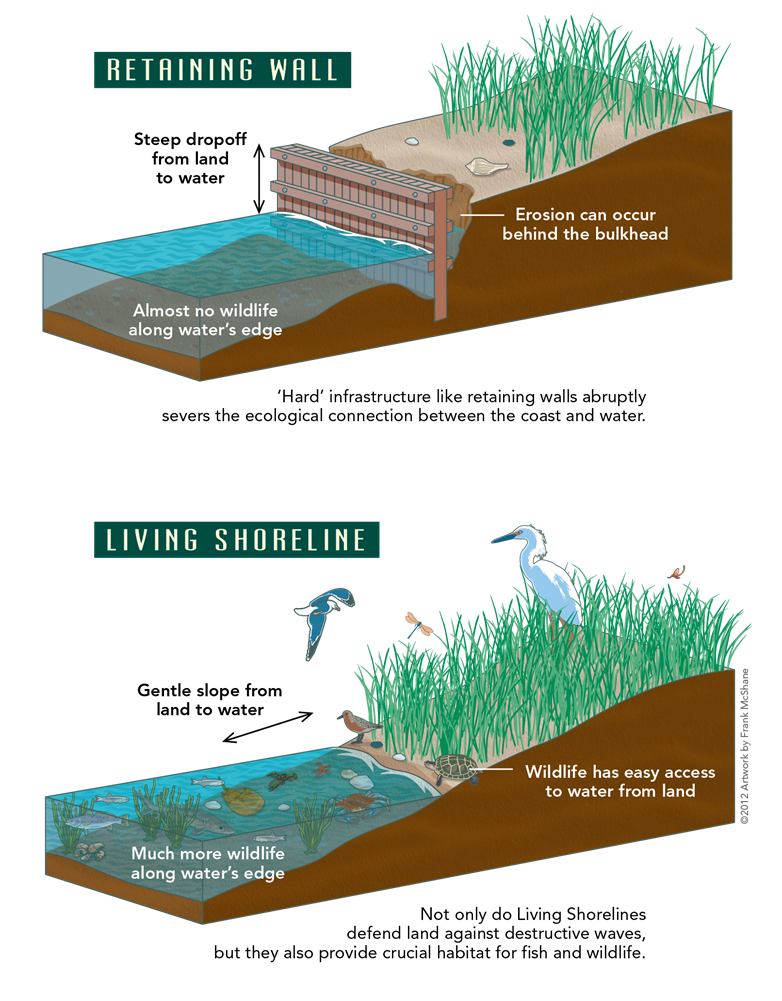
Living shorelines are shoreline buffers and barriers that stabilize shorelines, support the accretion of sediments, facilitate the recruitment of oysters, and encourage the growth and migration of marsh vegetation. As sea levels rise, supporting marsh adaptation is critical, and encouraging living shorelines over hardening shorelines is key to that outcome.
The Port Royal Sound Foundation is working with partners at the local, state, and regional scales to demonstrate the effectiveness of living shorelines in supporting marsh resilience, and accelerate its adoption and implementation at scale.
The South Atlantic Salt Marsh Initiative (SASMI) is a voluntary, non-regulatory partnership that brings together local, state, and federal partners, communities, and nongovernmental organizations to enhance the long-term abundance, health and resilience of the approximately 1 million acres of salt marshes within the South Atlantic states to ensure no overall loss of the benefits these wetlands provide to fish, wildlife, and people. Port Royal Sound Foundation is one of more than 400 members of this coalition, and a member of the South Carolina Implementation Team.
Lowcountry Council of Governments. “Marsh Evolution and Sedimentation: Defining a Method to Categorize Marsh Typologies, Accretion, Elevation, and Health for Use in Restoration Techniques.” 2022.
This project focused on a small marsh island on the Whale Branch creek to model processes that control marsh health and evolution in the larger Broad River/Port Royal Sound habitats. This historic island and the marshes surrounding it tell a larger story of the role that sediment accumulation, erosion, and sea level rise has in the marshes throughout the area. By studying the habitats (Figure 1) and their history and relationship to marsh evolution and elevation trends this phase I project has provided information for the development of restoration techniques tailored to the wide variety of marsh conditions found within the Port Royal Sound. Also see the handout and presentation for more information.
Ways You Can Support Dynamic Marshes in the Port Royal Sound:
- Support the Expansion of Living Shorelines: Do you or does your community have marsh-front property? Consider installing living shorelines to stabilize your shorelines and encourage marsh adaptation to sea level rise.
- Volunteer: There are TONS of volunteer opportunities to install living shorelines and to restore marsh in the region. Learn more by signing up for the PR Sound Science newsletter.
Partners
Biodiversity
A critical indicator of the health of Port Royal Sound is knowing what lives in its waters and along its shores, as well as the health and abundance of those species. Port Royal Sound Foundation is involved in several projects and initiatives to research and monitor several different types of species that call the PRS watershed home.
The Port Royal Sound Inshore Slam 10-day tournament and the accompanying year-long Reel Science Fishing Challenge are catch-and-record fishing events that allow anglers and citizen scientists to help us collect important data about fish swimming in the Port Royal Sound. Organized with support from SCDNR and our partners at Angler’s Atlas, the events record catch data in a robust, dynamic database that tracks catch data by species, length, location, season, etc. This data is helping us better understand fish diversity, populations, distribution, and seasonal patterns in the Port Royal Sound.

Learn More about the PRS Inshore Slam & Reel Science Challenge
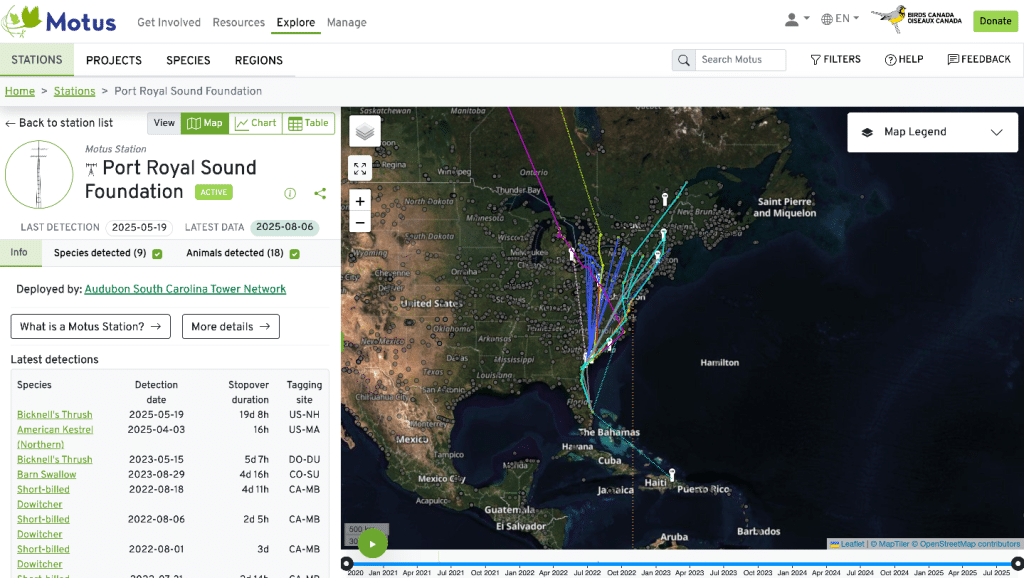
Click the map to access the live Motus dashboard
Motus stations include power antennas and transmitters that can detect monitoring tags attached to animals, read the unique code associated with that tag, and transmit that data to the monitoring network. With more than 2,200 stations set up around the world, including 32 along the South Carolina coast and one at the Port Royal Sound Foundation Maritime Center, the Motus network allows researchers and birding enthusiasts to monitor bird migration routes.
Only one species of turtle is found year-round in Lowcountry salt marshes – the Eastern Diamondback Terrapin (Malaclemys terrapin centrata). This elusive species spends its entire life deep in the marsh, in shallow creeks with little human traffic, making it challenging to study. While there is much we don’t know about these creatures, they can reveal a great deal about the health of our marshes and estuaries. To study and assess the well-being of these species in this region, the Port Royal Sound Foundation, in partnership with the University of South Carolina – Beaufort (USCB), Lowcountry Ecological LLC, Sewanee University, Turtle Survival Alliance, and SCDNR, has launched the Beaufort Terrapin Project to study and assess these turtles in the Port Royal Sound.

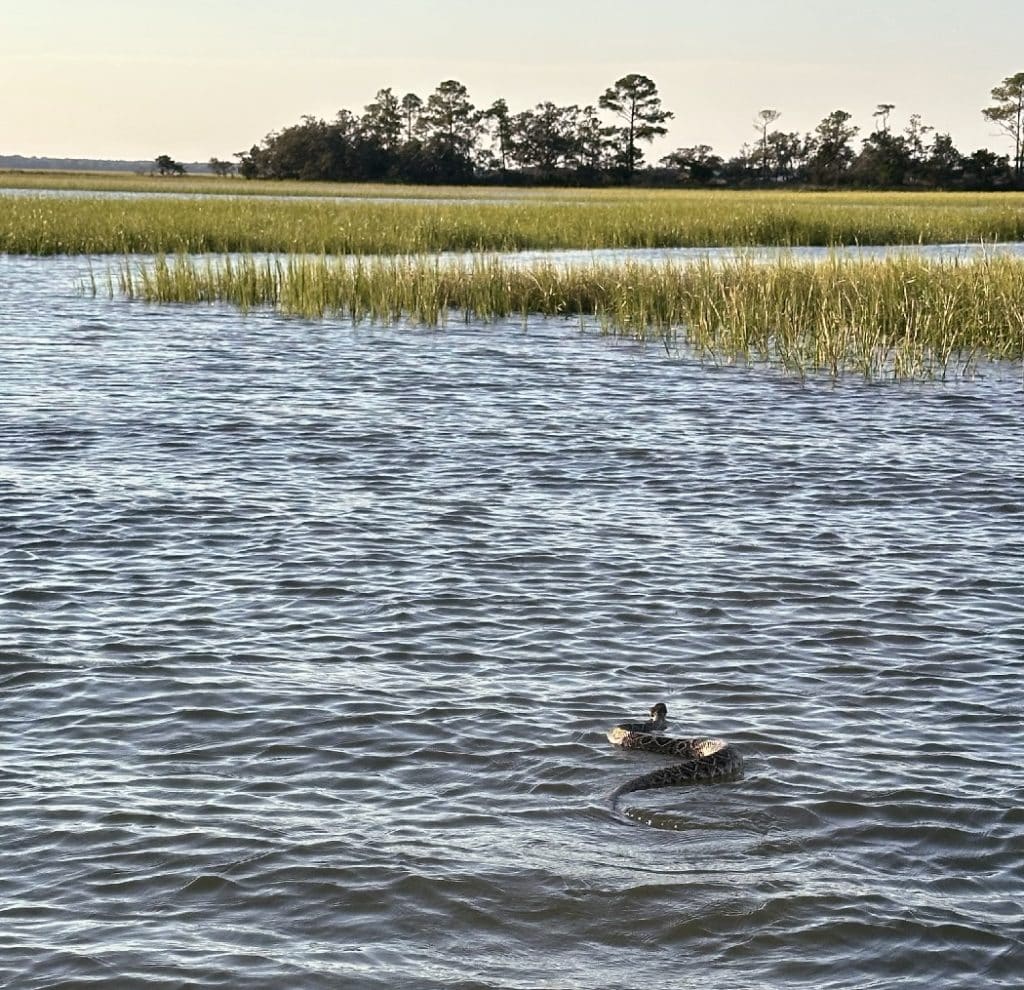
The Eastern Diamondback Rattlesnake (Crotalus adamanteus) is the largest venomous snake in North America and is in rapid decline. Once thought to be strictly a pine savanna species, we now know that some of the most robust populations exist right here on the barrier and sea islands of the Port Royal Sound watershed, where they ambush prey in the dense maritime forest and dune habitat. This species is crucial to a healthy ecosystem, as its top-down approach effectively controls the populations of small to medium-sized mammals.
To better understand and study this species in the Lowcountry, PRSF is partnering with researchers and natural resource managers at Marshall University, Marine Corps Recruit Depot Parris Island, SCDNR, USCB, Coastal Carolina University, SC State Parks, and Lowcountry Ecological LLC to form an EDB Working Group. This group is coordinating efforts to track the genetics, movement, and population viability of snakes on different islands in the region, as well as how they utilize and traverse these islands, and the unique qualities of each island’s population.
Port Royal Sound Foundation has supported the bottlenose dolphin monitoring work done in the May, Colleton, and Chechessee Rivers by Dr. Eric Montie in the USCB Marine Sensory and Neurobiology Lab. Using visual surveys and acoustic monitoring instruments, this work has provided tremendous insights into life below the waters. Acoustic data analysis has provided a better understanding of the soundscapes of the Sound, including vocalization patterns of different marine species at various times of the year. The lab is also working to build a growing catalogue of individual dolphins, including whether they are part of resident or migratory pods. All of this information helps us better understand these charismatic species and keystone predators that are so representative of the Port Royal Sound.
Learn More about the Work of the Marine Sensory and Neurobiology Lab at USCB
Ways You Can Contribute To Our Understanding of Biodiversity in the PRS:
- Join the Inshore Slam and/ or Reel Science Fishing Challenge to collect and report data on fish in the PRS (while having a good time on the water!) – https://portroyalsoundfoundation.org/inshore-slam/
- Contribute observations to other valuable citizen science data collection projects like iNaturalist, eBird, and HerpMapper that help us corroborate other findings.
- Support research grants and projects with financial contributions to this work
Partners



Community Resilience
Community Resilience is a little different than the other indicators, in that it’s a reflection of what we are doing to prepare and adapt to changes in our environment. The science behind climate change is undeniable, and its effects are already being seen and felt in the Port Royal Sound watershed. We are witnessing rising sea levels, more frequent flooding, increasing water temperatures, more extreme summer temperatures, and changing seasonal patterns, among other effects. We understand some of the impacts of climate change, such as septic tank failure, rising groundwater levels, and flooded roads. But we still don’t understand all of the effects on our Sound ecosystem. Building resilience is a way to help us prepare for the impacts of climate change – known and unknown.
Port Royal Sound Foundation is involved in several projects and initiatives focused on building resilience to climate change in the region. These are all collaborative efforts to support our environment and communities prepare for and respond to the effects of environmental change.
The Resilient Coastal Communities Collaborative Program is a federally funded project being led by the South Carolina Office of Resilience and SC Sea Grant Consortium to assess vulnerabilities in the communities across the Salkehatchie River Basin (which includes the Port Royal Sound watershed) and develop community-scale and watershed-scale resilience plans for addressing these vulnerabilities. This project is focusing specifically on the needs of 10 communities in the Basin that do not already have robust resilience planning efforts underway. Port Royal Sound Foundation has served as a partner in supporting this project since it kicked-off in 2023.
Learn More about the Resilient Coastal Communities Collaborative Program
The Southern Lowcountry Resilience Collaborative (SoLoReCo) is a collaborative group comprised of stakeholders who have an interest in helping communities, economies, and ecosystems in the Southern Lowcountry region of Jasper, Beaufort, Colleton, and Hampton counties. The purpose of this group is to actively pursue regional collaboration on initiatives that improve the quality of life, environment, infrastructure, and economic resilience of all communities in the region to anticipate, absorb, recover, and thrive in the face of environmental change and natural hazards.
This group was formed following the Beaufort Regional Resilience Accelerator Workshop to pursue a regional approach to accelerating resilience project implementation. Port Royal Sound Foundation is taking a leadership role in this group, which is still taking shape.
Learn More about the Outcomes of the Beaufort Regional Resilience Accelerator Workshop
As part of the statewide effort to develop a fifty-year plan for water supply and demand across the state, the Port Royal Sound Foundation serves on the Lower Savannah-Salkehatchie River Basin Planning Council, representing the environmental interests of the Basin in determining water withdrawal limits and decision criteria. This Council spent 18 months reviewing hydrologic, climate, and water use data to develop a plan and recommendations for sustainable water use and permitting in the Basin and across the state, which will go into effect in 2026. Beyond planning, this Council advocates for sustainable water use planning policies and processes.
Learn More about the Lower Savannah Salkehatchie Water Basin Planning Process & Plan
Ways You Can Support Building Community Resilience Across the Watershed:
- Stay Informed & Engaged: Community resilience initiatives are about making OUR shared communities and natural resources better prepared to respond and recover from a changing environment. If you live in the Port Royal Sound watershed, this means recognizing that change is occurring and requires investing in better infrastructure, supporting and upholding policies that conserve and protect natural buffers, supporting investment in our most vulnerable communities, and being part of a community of solutions.
- Invest & Spend Locally: The resilience of a community, or its ability to rebound after shocks, is usually directly correlated with its financial and human resources. Supporting local businesses, schools, history, and culture contributes to the strength of local communities. So buy local! Invest locally!
- Volunteer: Learn more about opportunities to get involved in resilience initiatives by signing up for the PR Sound Science newsletter.
Partners