There is a paradox surrounding alligators—creatures that evoke fascination and fear in tourists and residents alike. But we are living in their habitat, so it’s helpful to better understand how we can be good neighbors!

About the American Alligator
The American Alligator (Alligator mississippiensis) is one of 25 crocodilian species found worldwide, and one of only two alligator species (the Chinese Alligator being the other). American Alligators are found only in the Northern Hemisphere in temperate environments, while most other crocodilians are found in tropical to subtropical conditions. The American alligator is a long-lived, slow-growing reptile and, at its peak, is the apex predator in the southeastern United States. They inhabit river systems and swamps under natural conditions and can have home ranges of nearly 60 square miles.
As ectothermic or cold-blooded creatures, alligators regulate their body temperature by basking or moving between air and water. They are most active between 82°F and 92°F, stop feeding below 70°F, and become dormant below 55°F. During the winter temperatures, they typically retreat to burrows near open water, though they occasionally emerge to bask on the banks on warmer days.
A mother alligator cares for multiple ‘clutches’ of their young for nearly three years. When juveniles leave their mother, they go on a sort of walkabout that defines their territory—identifying feeding, breeding, and overwintering habitats. Individuals can grow for nearly 43 years and can live potentially over 80 years. Males are larger and can exceed 13 feet in length, while the females reach around 9.5 feet. The age of an individual alligator can be difficult to tell — an 8-foot female may be 20 years old or 60 years old.
Why is this information helpful to know? Because it helps us understand and coexist with the species that lived in this region and habitat long before our communities were built.
Sharing Habitat
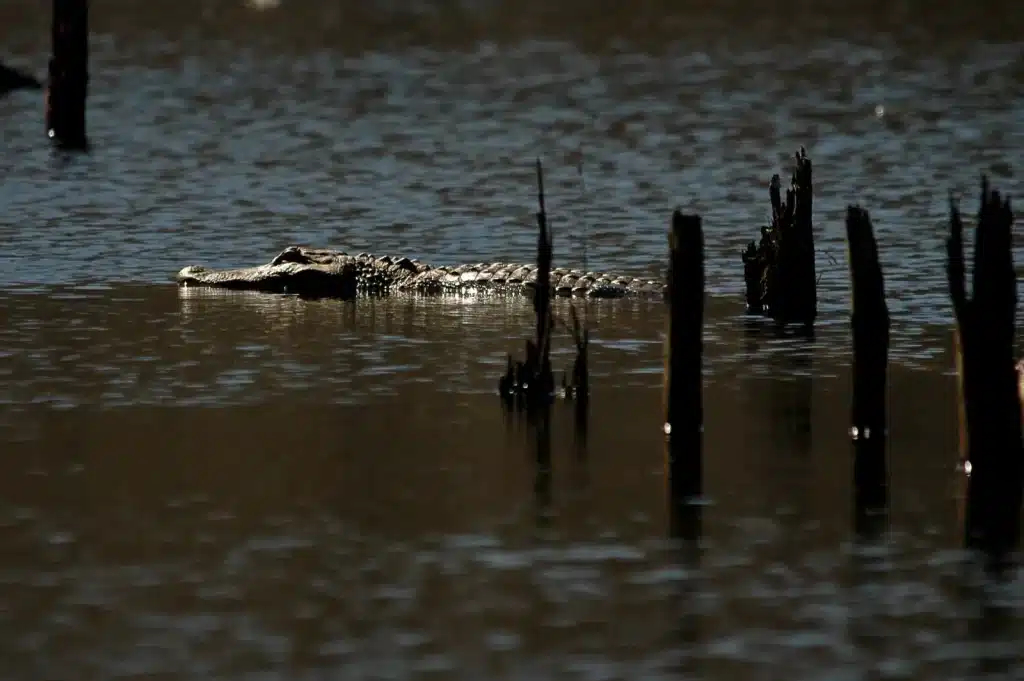
We live in the “Lowcountry” — a term literally describing the topography of the area. The Lowcountry is barely above sea level, surrounded by swamps and marshes, with sandy soils and few natural ponds. The ponds and lagoons that we see have mostly been constructed to manage water as roads and neighborhoods have been built. American Alligators have adapted well to this altered environment that provides large open ponds, interconnected drainage systems, and ample prey in the form of deer, raccoons, rodents, and other small animals. Really, for a gator, what’s not to love!?
But as more people move into the Lowcountry, people’s proximity to these habitats is getting closer, and we need to learn to be good neighbors. Where we most often see humans and alligators cross paths in our communities is around ponds and lagoons, so let’s talk about this habitat feature specifically.
First, it’s important to keep in mind the functional purpose of ponds in our communities: to capture stormwater runoff from our roads, sidewalks, and roofs. To serve their purpose of holding water, stormwater ponds should be maintained at low water levels to provide storage capacity when rainfall occurs. If a pond is maintained at too high a level, it will overflow during heavy rain bursts. When a pond captures stormwater runoff, this water is often polluted with oils, fertilizers, chemicals, trash, and other substances washed off our roads, lawns, and other surfaces. One way to reduce pollutant loading into these ponds is to maintain vegetated buffers that can help filter incoming water and stabilize the ponds’ shorelines. Finally, well-maintained ponds also have a constant source of oxygen exchange to keep the water from becoming stagnant, usually in the form of an aerator or fountain.
Now let’s consider the features of a properly maintained stormwater pond as habitat for alligators. A pond maintained at low levels creates banks for alligators to bask on without climbing out of the basin. It also reduces the space available to alligators, which will naturally limit their numbers and size. A vegetated shoreline creates shade, places to hide, habitat for smaller prey that alligators feed on, and demarcated pathways that limit access to the water. By contrast, a stormwater pond maintained at high water levels with no vegetation along the banks provides no barriers between habitats, and alligators are more likely to come into contact with people and animals outside the pond area. As they say – good buffers make good neighbors!
Living with Alligators
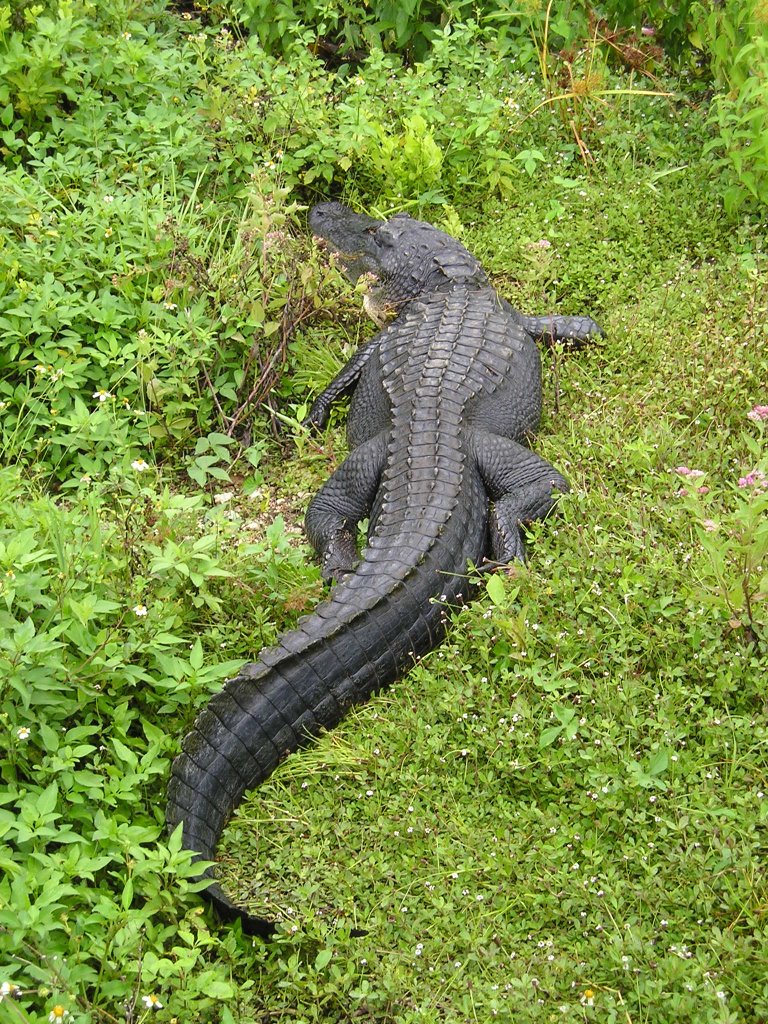
Alligators help control pests, are often fearful of humans, and are ecosystem engineers that can alter their environment. They are keystone species that should be respected and admired.
- Keep a safe distance from alligators and areas where alligators exist
- Keep dogs on a leash and away from water features anywhere in the Lowcountry.
- DO NOT attempt to feed, harass, or disturb alligators; this is a sure way to make this animal a nuisance and create dangerous situations for everyone.
Be alligator smart! Learn more by visiting SCDNR – https://www.dnr.sc.gov/wildlife/alligator/aFAQ.html or meet an American Alligator up close by visiting the Maritime Center.