UPDATE ON PLASTIC ORDINANCE (5/2/2026)
In March, the City of Beaufort was the first municipality to consider the revised Beaufort County plastic ordinance at the city scale. After some heated conversation about straws, the ordinance passed its first reading, contingent on the county council and other municipalities recommending revisions.
In April, the Beaufort County Natural Resources Committee (part of the County Council) took the ordinance under consideration. With only seven of the eleven Council members in attendance, the committee voted 5-2 to advance a revised plastics ordinance to the County Council. Committee members Mark Lawson (District 9) and Anna Maria Tabernik (District 6) voted against the revisions.
The ordinance now heads to the full Beaufort County Council for first reading on Monday, May 11. The meeting will be held at 6pm in County Council Chambers (100 Ribaut Road, Beaufort, SC 29902).
According to Beaufort County Council Rules & Procedures, except in the case of Emergency Ordinances, all ordinances must be read at THREE public meetings of Council on three separate days. At the first reading, there is an opportunity to vote to pass the ordinance with recommendations for revisions, which will be reviewed and voted on during the second reading. If substantive modifications or amendments to an ordinance are proposed after second reading, the Chairman shall remand the ordinance for an additional reading. However, if the proposed ordinance fails to pass first or second reading, it is considered defeated.
How Can You Show Your Support for Reducing Plastic in the Port Royal Sound?
- Write or call your County Council member before the May 11 meeting to share your support for the revised plastic ordinance to reduce the amount of plastic going into the Port Royal Sound. You can find your Council member’s contact information here.
- Show up and demonstrate your support for the ordinance at the Council meeting on Monday, May 11. Be prepared, these meetings can be long…
- Speak up at the County Council meeting. Arrive before the meeting starts at 6 pm to sign up to provide public comment (max 3 minutes) to describe why reducing the distribution of single-use plastic items in Beaufort County is important to you, to our community, and to the Port Royal Sound.
- Say no to single-use plastic items when you go out to a store or restaurant. Show businesses that reducing plastic is what their CUSTOMERS want too.
Want to speak but not sure what to say?
Providing public comment can seem scary, but it shouldn’t be. You are a citizen and a voter (or future voter) in this community, and your voice matters. The key to an effective public statement is to make your point clear, concise, confident, respectful, and compelling. You only have three minutes, so it helps to plan out what you’re going to say ahead of time to make the most of that time. Here is a quick format to help you prepare:
- Thank the Council. It helps to be polite to start. Example – Thank you to members of Council for your service to our community.
- Introduce yourself. Provide your name, (age if you’re young), where you live or go to school, and if you’re speaking on behalf of a larger group or organization.
- Clear statement of your purpose. Make your reasons for addressing the Council very clear. Example: I am here tonight to show my support for the revised ordinance to reduce the flow of plastic pollution into our community/ environment/ bodies.
- A short description of WHY this issue matters to you. This is your opportunity to make it personal and compelling, but try to stick to ONE reason or story about your connection to the problem that is most important to you. Keep it clear and concise.
- What you want them to do. End with a very clear appeal for what you would like them to do. Example: So please vote yes to advance this ordinance to the next step to reduce the impacts of plastic pollution in Beaufort County.
Remember, this is YOUR community and our shared environment. Its important to use your voice to stand up for what you think is important.
Reducing Plastic Pollution in the Port Royal Sound
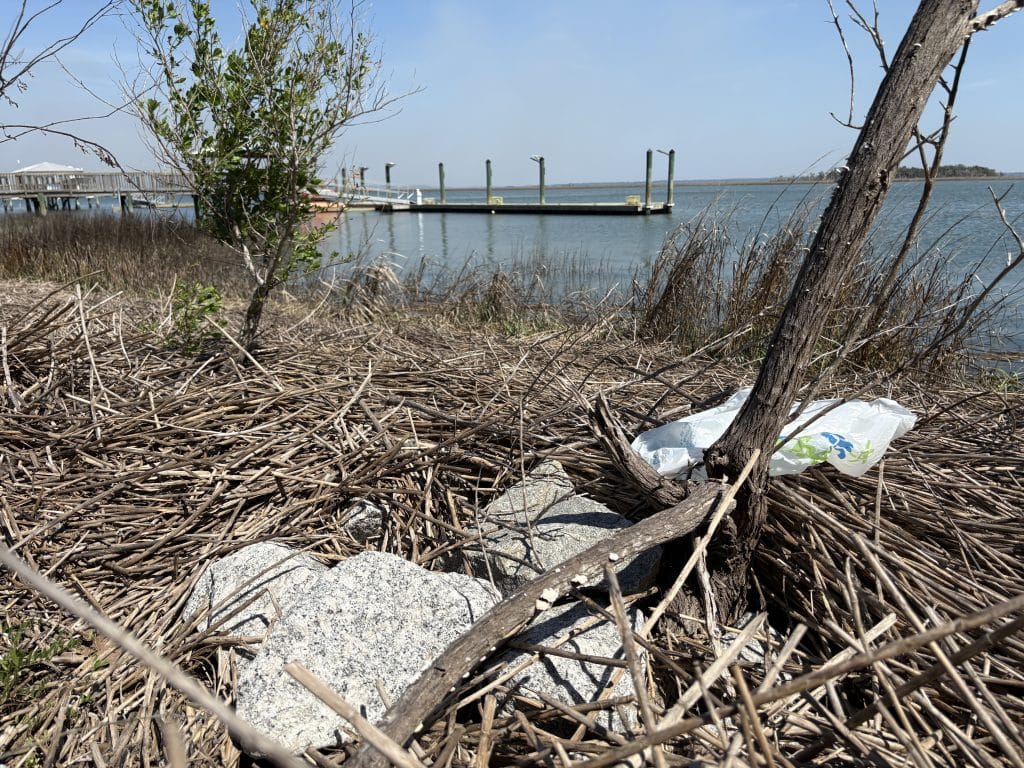
You may have seen or heard this widely cited statistic: “It’s projected that by 2050, the ocean will contain more plastic than fish by weight if current rates of plastic leakage continue.” This stat comes from a 2016 World Economic Forum report that projects increases in plastic production and pollution in a business-as-usual scenario and presents the case for reducing plastic production, focusing primarily on packaging. Ten years later, efforts to curb plastic production on a global scale have failed. But increasingly, local governments are picking up where global negotiations have failed, and managing the distribution of plastic in their communities.
Unlike natural materials like wood or paper, plastic does not biodegrade in the marine environment. In its whole form, plastic waste creates hazards to marine life. Dolphins, whales, and birds get tangled in abandoned nets and lines and choke or drown. Sea turtles mistake floating plastic films for jellyfish, a mainstay of their diet. Instead of biodegrading, that plastic breaks down into smaller and smaller pieces, becoming microplastics (pieces <5mm) and eventually nanoplastics (pieces <1µm). These smaller bits of plastic become suspended in the water column, mixing with the planktonic life that forms the base of the food chain. Here, microplastic particles get consumed by other fish, shellfish, birds – working their way up the food chain to our plates. The estimate is that humans are consuming plastic at the rate of about 5 grams per week – the equivalent of eating a credit card per week! And unfortunately, one of the major sources of human consumption of plastic is seafood.
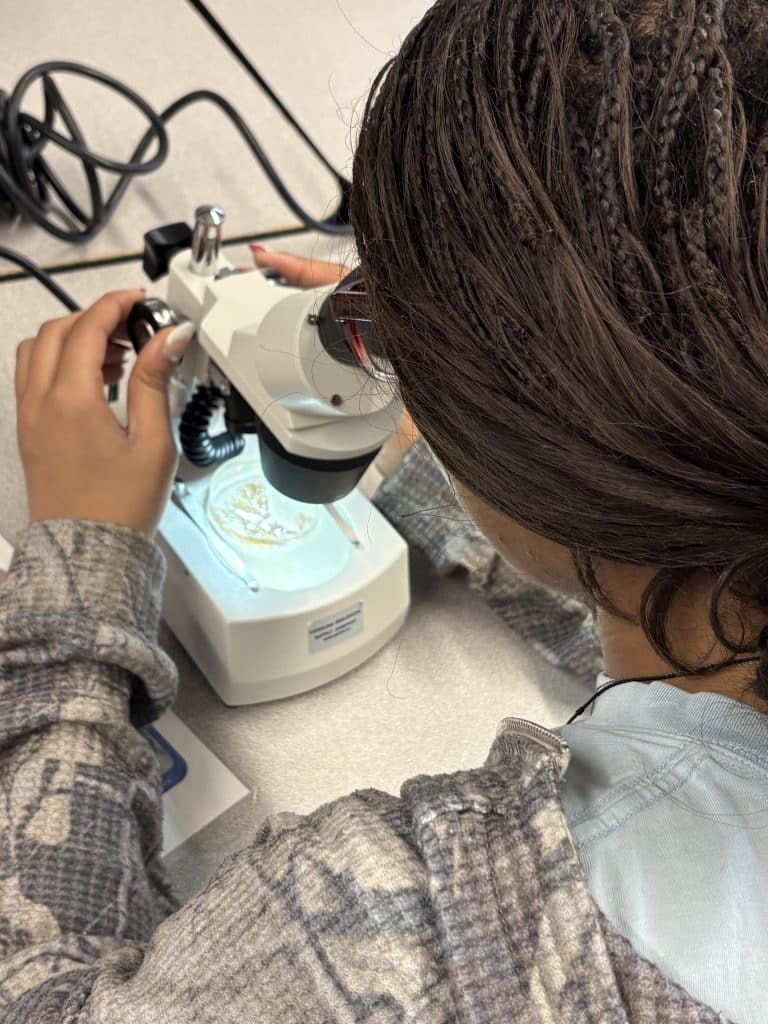
Even in our own work here on the Port Royal Sound, we see plastic fibers under the microscope almost every time we pull a plankton net with students. This is not just a global problem – its impacts are being seen right here in the Sound. And the solutions start here.
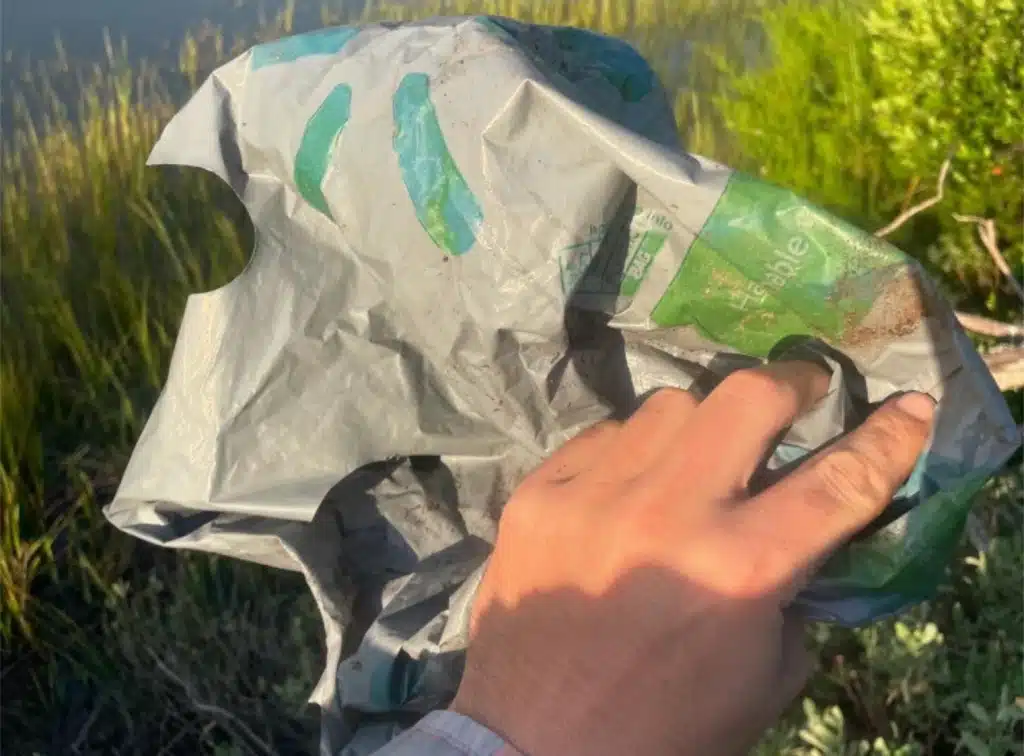
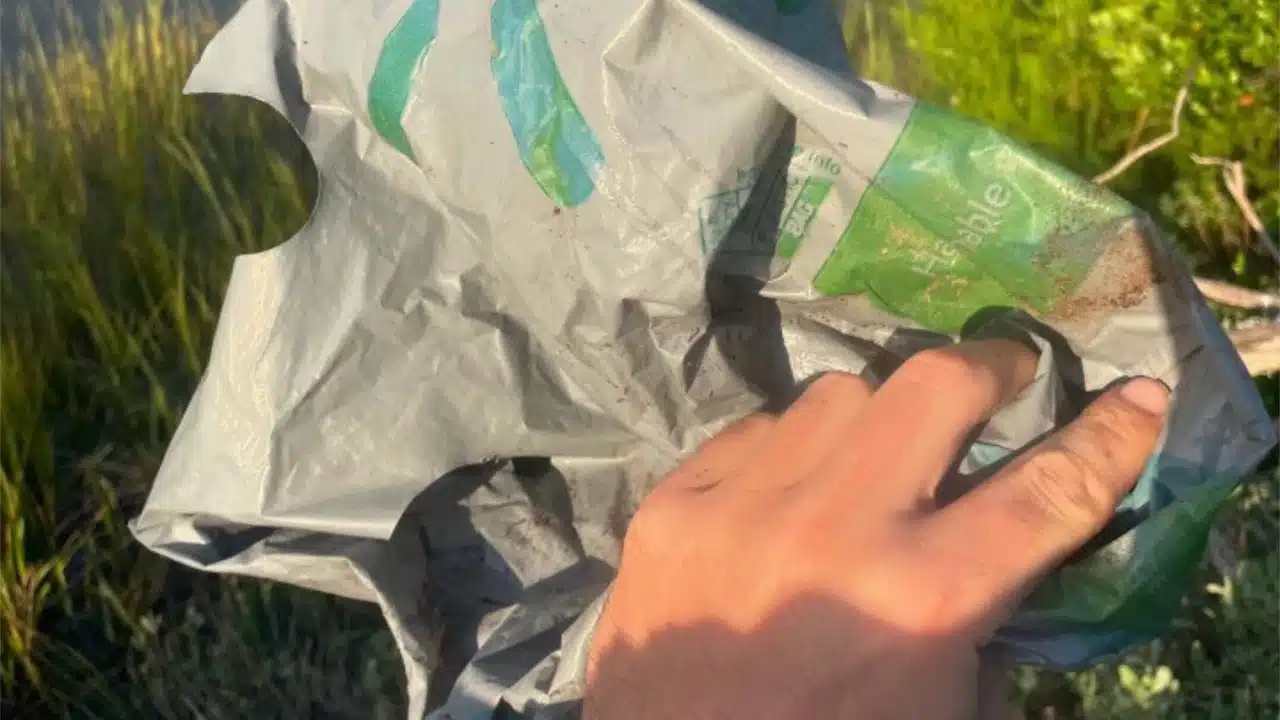
In 2018, Beaufort County took the first important steps to reduce plastic pollution entering our environment by passing an ordinance intended to eliminate the distribution of single-use plastic bags by businesses across the county. But the ordinance language left an unintentional loophole for businesses to transition from distributing flimsy thin plastic bags, to the thicker bags we see today, because they could argue that the thicker bags were reusable.
To close that loophole and further slow the flow of plastic pollution into our environment, Beaufort County and its affiliated municipalities are considering a broader revised plastic ordinance. This revised ordinance would eliminate the distribution of all single-use plastic bags, as well as expanded polystyrene takeout containers and cups. It would also limit the distribution of plastic straws and utensils to customers who explicitly request them.

This proposed ordinance was developed based on survey feedback collected in 2025 from both businesses and consumers, with more than 6,000 residents and 126 businesses responding. In both cases, there was significant support for regulatory action to reduce the distribution of single-use plastic items, which we know are contributing to plastic pollution in our community. The graph presented here represents support for different regulatory actions for different plastic items, separated by resident and business respondents.
The ordinance would have to be adopted by the County Council and the Councils of ALL municipalities within Beaufort County before it would take effect. Then, there would be an eight-month transition period for businesses to comply.

In April, we will see this ordinance hit the agenda for the Beaufort County Council Natural Resources Committee, then, hopefully, go to Council for first reading. We will also likely see it on the agendas of Port Royal, Bluffton, and Hilton Head this spring. The City of Beaufort has already held their first reading of the ordinance, and it was moved forward.
As a champion of the Port Royal Sound, a defender of life in the Sound, and as someone who probably doesn’t love the idea of consuming plastic in our seafood, consider whether you think Beaufort County should be part of the solution in turning the tide on plastic by adopting this ordinance to reduce the distribution of single-use plastics across the County.